
What's Happening?
The United States' recent military action in Venezuela, which led to the capture of President Nicolás Maduro, has drawn widespread condemnation from international leaders. Russia and Iran have labeled
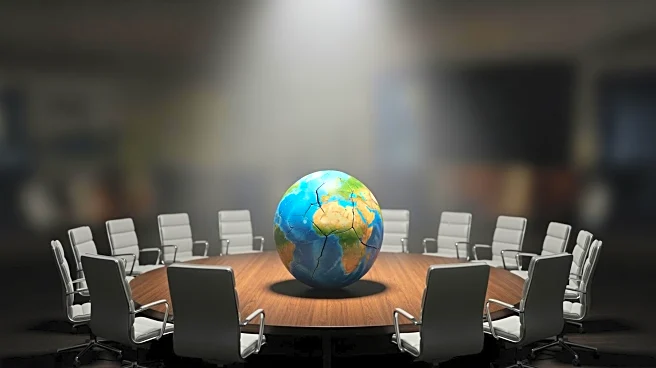
the action as 'armed aggression,' while other global leaders have called for de-escalation and adherence to international law. The UN Secretary-General expressed deep concern over the precedent set by the U.S. action, emphasizing the importance of respecting international law. The situation has prompted calls for an urgent meeting of the UN Security Council to address the crisis.
Why It's Important?
The U.S. military intervention in Venezuela represents a significant escalation in international relations, potentially destabilizing the region and straining diplomatic ties. The action has been criticized for violating international law, raising concerns about the precedent it sets for future interventions. The capture of Maduro could lead to increased tensions between the U.S. and countries like Russia and Iran, who have vested interests in Venezuela. The situation also poses a risk of humanitarian crises, with potential refugee flows and economic instability in the region.
What's Next?
The UN Security Council is scheduled to meet to discuss the U.S. action in Venezuela, with the potential for diplomatic resolutions or further international responses. The outcome of this meeting could influence future U.S. foreign policy and international relations. Meanwhile, countries in the region, such as Colombia and Brazil, are preparing for possible refugee influxes and are calling for peaceful resolutions. The international community will likely continue to monitor the situation closely, with potential implications for global diplomatic and economic stability.