




What's Happening?
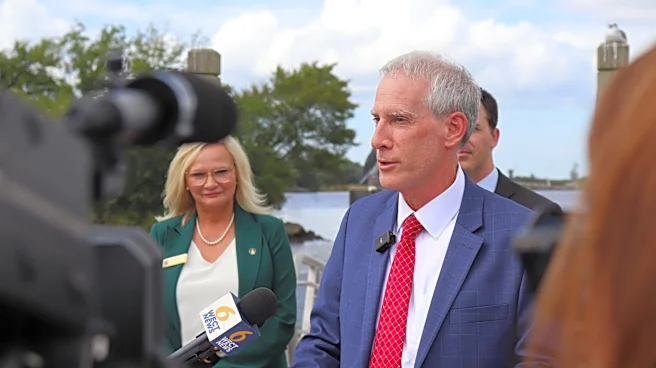
Local officials from New Hanover County, Wilmington, and Leland have formally requested federal and state representatives, including Senators Thom Tillis and Ted Budd, and Representative David Rouzer, to authorize a new study of the Cape Fear River's
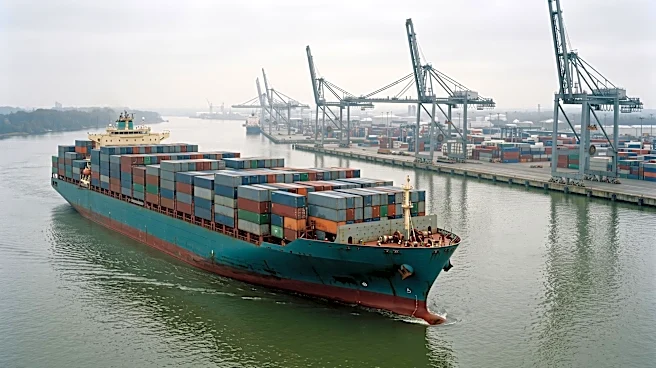
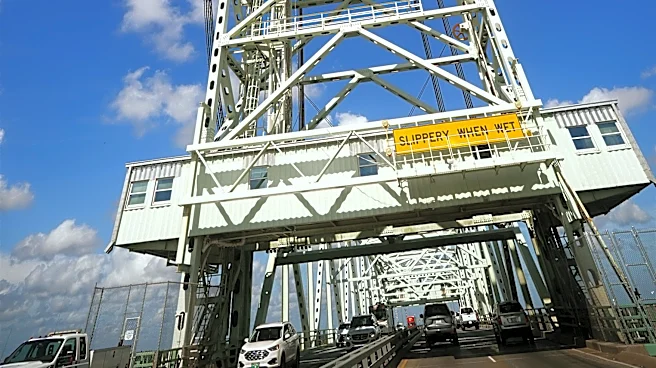
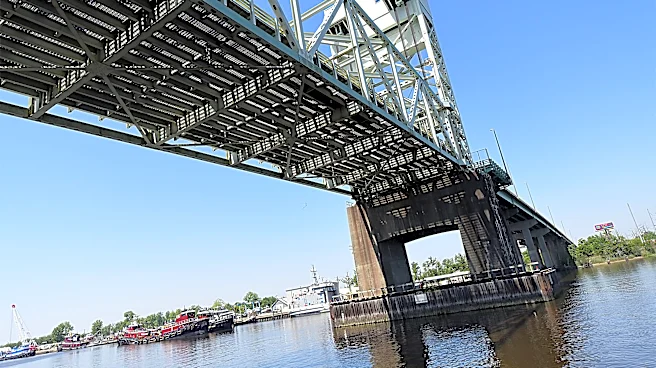
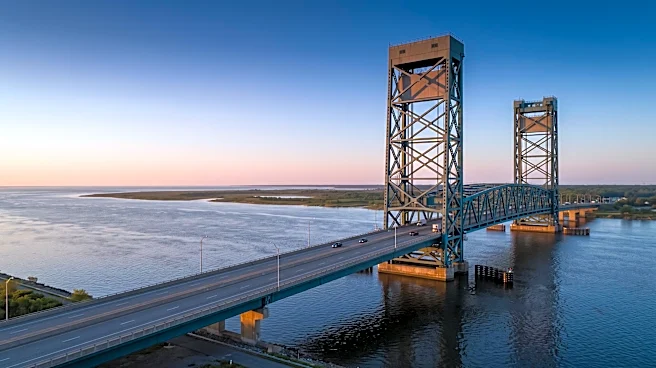
navigational needs. This request comes amidst ongoing discussions about replacing the Cape Fear Memorial Bridge, with two primary options under consideration by the N.C. Department of Transportation (NCDOT): a movable-span bridge (Alternative A) and a fixed-span bridge (Alternative B). Local officials and residents largely favor the lower, movable-span bridge due to concerns about the taller fixed-span bridge's impact on downtown neighborhoods, traffic flow, and potential noise and pollution. The current federal and state recommendations suggest a minimum vertical clearance of 135 feet, which would favor the taller fixed-span option, despite local data indicating reduced navigational needs for taller clearances.
Why It's Important?
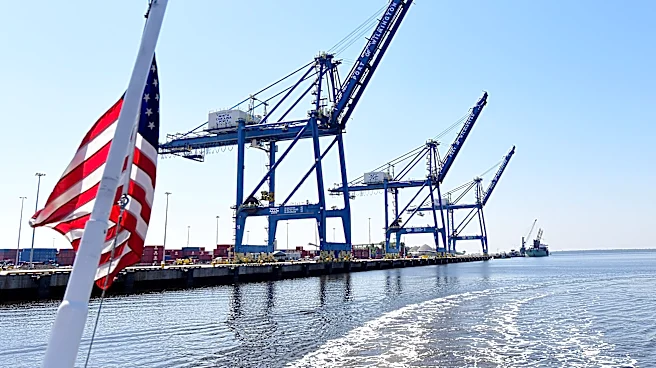
The debate over the Cape Fear Memorial Bridge replacement highlights a significant conflict between local community concerns and broader regional transportation and navigational requirements. The decision will have long-lasting impacts on Wilmington's urban landscape, traffic patterns, and economic development. Local officials' preference for a lower, movable-span bridge stems from a desire to preserve historic neighborhoods and manage traffic congestion more effectively, while also potentially reducing construction costs. However, federal recommendations for a taller bridge prioritize navigational needs for larger vessels, which could be crucial for the port's future. The outcome will determine not only the physical structure of a vital transportation link but also the balance between local community interests, federal navigational standards, and the economic implications of a multi-billion dollar infrastructure project.
What's Next?
The request for a new federal study on the Cape Fear River's navigational needs could potentially delay the bridge replacement project. NCDOT is working towards a September 30 grant obligation milestone, requiring a grant agreement submission by the end of February. This timeline necessitates a decision on the bridge alignment alternative by the end of the year and potential tolling legislation. If the Federal Highway Administration (FHWA) determines a more detailed Environmental Impact Study is needed due to the new study request, it could jeopardize the existing federal and state funding of $327 million. Local officials acknowledge this risk but argue for thorough consideration of community impacts. The project faces a funding gap of over $700 million, with tolling being a likely component, which also requires legislative change. The coming months will be critical for determining the project's direction, funding, and timeline.