


What's Happening?
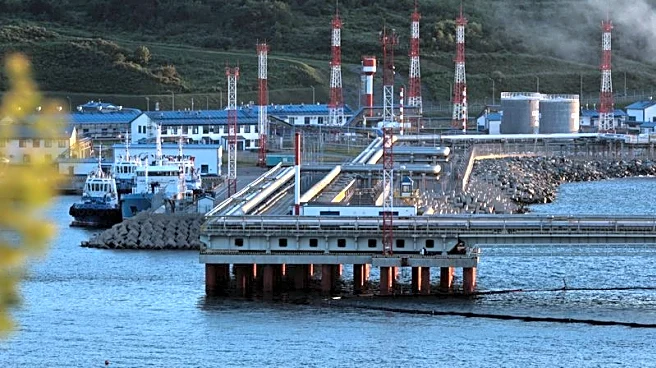
Panama's Supreme Court has ruled that the concession held by a subsidiary of Hong Kong's CK Hutchison Holdings for operating ports at both ends of the Panama Canal is unconstitutional. This decision aligns with U.S. efforts to limit Chinese influence
over the strategic waterway. Panama's President José Raúl Mulino assured that port operations would continue uninterrupted, with a local subsidiary of A.P. Moller-Maersk set to manage the ports temporarily. The ruling follows an audit revealing irregularities in the concession's 25-year extension, granted in 2021. The decision has drawn criticism from Hong Kong and China, with potential legal actions anticipated.
Why It's Important?
The ruling is significant as it reflects ongoing geopolitical tensions between the U.S. and China, particularly concerning strategic assets like the Panama Canal. The decision could impact international trade routes and logistics, given the canal's importance in global shipping. It also underscores the U.S.'s strategic interest in maintaining influence over the canal, a critical maritime passage. The outcome may affect Panama's economic relations with China and could lead to legal disputes, influencing future foreign investments in the region.
What's Next?
The transition of port operations to a new concessionaire will be closely watched, with potential implications for international trade and diplomatic relations. The Panamanian government will need to manage the legal and economic fallout from the ruling, balancing national interests with international partnerships. The situation may prompt further scrutiny of foreign investments in strategic sectors, influencing policy decisions in Panama and beyond.