



What's Happening?
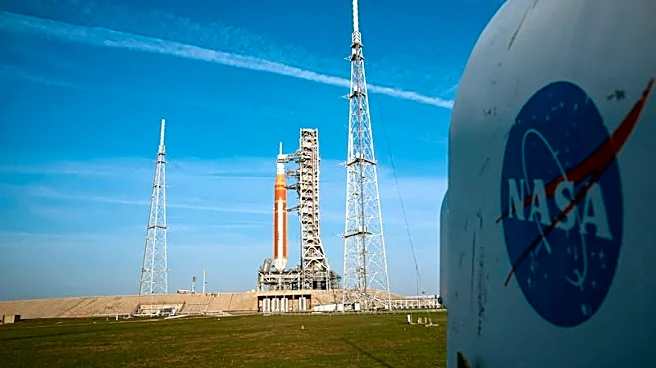
NASA has announced a strategic shift in its Artemis program, aiming to establish a long-term human presence on the Moon by the 2030s. This initiative marks a departure from the short-term Apollo missions of the past, focusing instead on building a sustainable
lunar infrastructure. The plan includes developing habitats, power systems, and surface infrastructure to support ongoing human activity. The Artemis program will involve a series of increasingly complex missions, starting with lunar flybys and culminating in the establishment of a base near the lunar south pole. The timeline has been adjusted to prioritize the development of reliable systems over speed, with the first landing now targeted for 2028. This approach integrates commercial partners like SpaceX and Blue Origin, emphasizing a collaborative effort to build a lasting presence on the Moon.
Why It's Important?
The establishment of a lunar base has significant implications for technology development, economic growth, and international space policy. Technologies developed for sustained lunar activity could have applications on Earth, such as in medicine and disaster response. Economically, the Artemis program supports jobs across the United States and among international partners. Strategically, as more countries and companies operate in space, the focus shifts from who arrives first to who defines the rules of engagement. The Moon is becoming a critical site for infrastructure and industry, and NASA's updated plan signals the United States' commitment to being a key player in this new phase of space exploration.
What's Next?
NASA's roadmap includes a test mission in 2027 to practice docking and life-support systems with commercial lunar landers in low Earth orbit. This mission will help ensure the reliability of systems needed for a sustained presence on the Moon. The first landing near the lunar south pole is planned for 2028, with the goal of establishing a base by the 2030s. The program's success will depend on the coordinated efforts of public and private partners, highlighting the importance of collaboration in space exploration. As the Artemis program progresses, it will shape the future environment of lunar activity and influence international space law and policy.