





What's Happening?
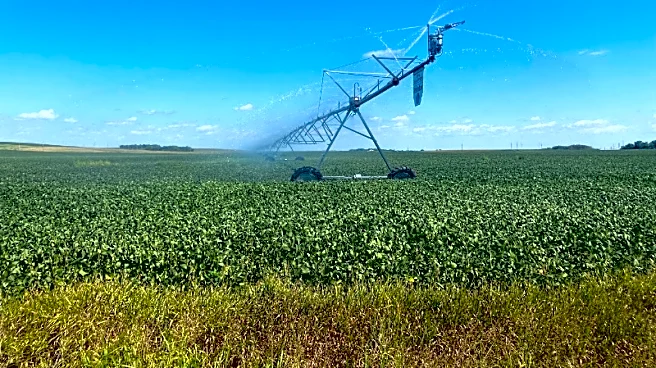
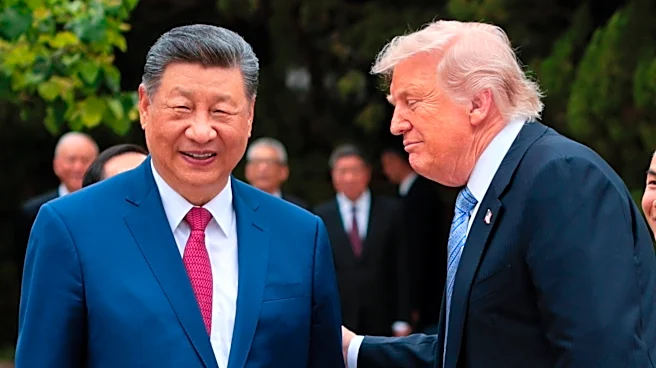
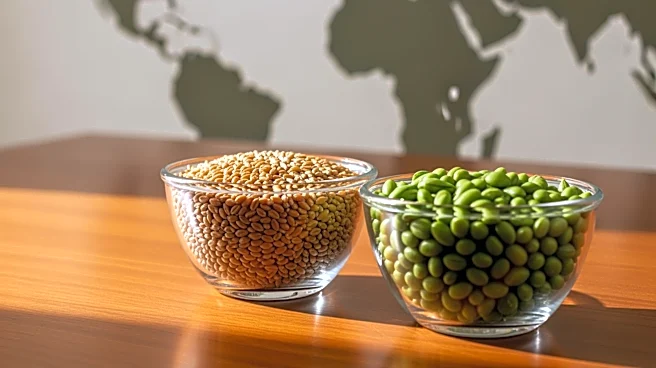
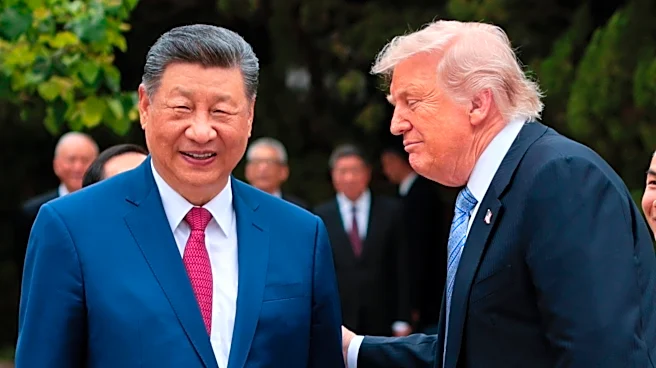
China has agreed to purchase at least $17 billion worth of US agricultural products annually through 2028, following a summit between President Donald Trump and Chinese President Xi Jinping. This agreement is part of broader efforts to stabilize US-China
trade relations, which have been strained by tariffs and geopolitical tensions. The White House announced that the deal includes commitments beyond previous soybean agreements, with China also addressing US concerns over rare earth supply shortages. Despite the positive tone of the summit, there remains skepticism about the fulfillment of these pledges, given past challenges in meeting trade commitments.
Why It's Important?
The agreement is significant for US farmers, who have faced economic challenges due to low crop prices and high costs exacerbated by geopolitical tensions. The $17 billion commitment could provide a much-needed boost to the agricultural sector, although it may not fully satisfy growers seeking to improve tough economic conditions. The deal also reflects ongoing efforts to manage economic interdependence between the US and China, highlighting the importance of dialogue and cooperation in resolving trade disputes. However, the lack of concrete details on tariff reductions and the history of unmet commitments raise questions about the long-term impact of the agreement.
What's Next?
Negotiations between the US and China are expected to continue, with both sides working on the specifics of tariff reductions and other trade measures. The White House has reiterated plans for President Xi to visit the US in the fall, which could provide an opportunity to further solidify trade agreements. Meanwhile, US farmers and industry stakeholders will be closely monitoring the implementation of the agricultural purchase commitments and any developments in trade policy that could affect their economic prospects.