






What's Happening?
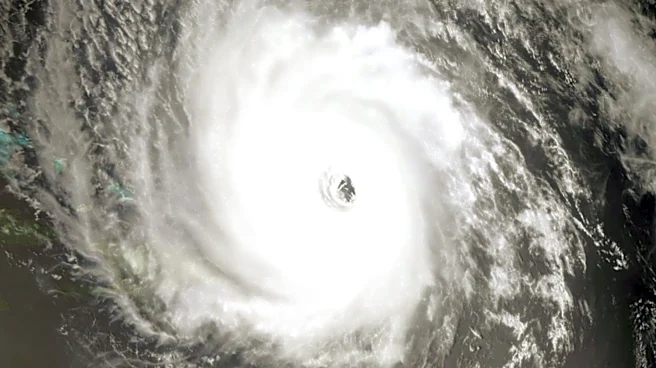
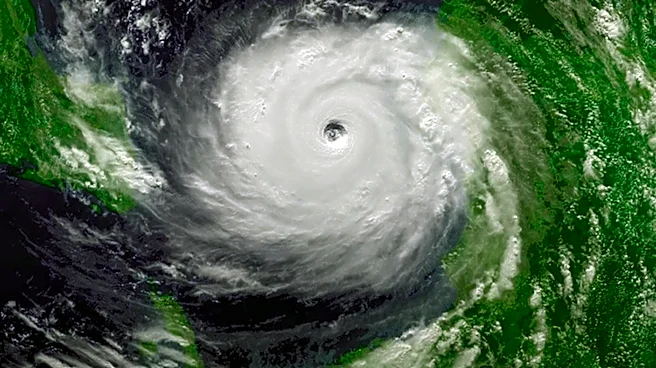
Typhoon Dolphin, the strongest typhoon to hit China this year, has made significant impacts as it moved inland, affecting Beijing and surrounding areas. The storm, which has traveled nearly 6,000 kilometers, brought extreme rainfall and flooding, prompting
emergency responses. In Beijing, authorities have activated the highest level of emergency flood responses in several districts, anticipating that the city will receive more than one-third of its annual rainfall within a 24-hour period. This has led to the closure of tourist areas and the suspension of construction projects. Over a million people have been evacuated from eastern China, including major relocations in cities like Wenzhou and Shanghai, due to fears of flooding and landslides. The storm has also affected the central Chinese province of Hubei, a significant manufacturing hub, where heavy rain warnings have been issued.
Why It's Important?
The impact of Typhoon Dolphin is significant due to its potential to disrupt major urban centers and economic hubs in China. Beijing, as the capital city, faces challenges in managing the flood risks associated with such heavy rainfall, which could affect infrastructure, transportation, and daily life. The evacuations and emergency measures highlight the severity of the situation and the potential for economic disruptions, particularly in manufacturing regions like Hubei. The storm's effects on infrastructure and the economy could have broader implications for supply chains and economic activities in the region. Additionally, the response to such natural disasters is crucial in assessing the resilience and preparedness of urban areas in dealing with extreme weather events.
What's Next?
As Typhoon Dolphin continues to move inland, authorities are likely to maintain high alert levels and continue emergency measures to mitigate the impact of flooding and landslides. The focus will be on ensuring the safety of residents and minimizing damage to infrastructure. In the coming days, the effectiveness of these measures will be tested as the storm progresses. Additionally, the situation in Japan, which is preparing for Typhoon Chan-hom, will be closely monitored as it could face similar challenges. The ongoing response efforts will be critical in managing the immediate impacts and planning for recovery and rebuilding in affected areas.