









What's Happening?
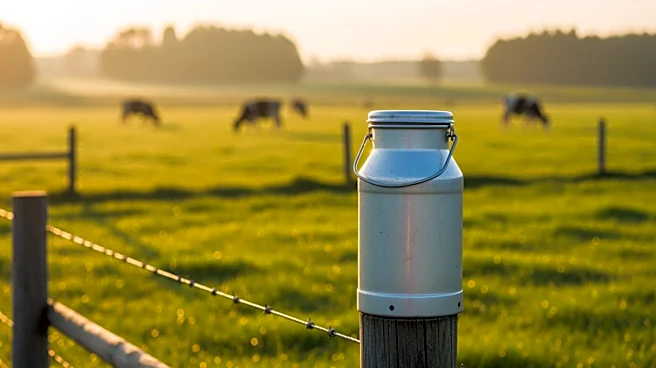
Egypt has reached full self-sufficiency in fresh milk production, with domestic output increasing to approximately 7 million tons in 2026, marking an 8% rise from the previous year. This achievement is attributed to genetic improvement programs that enhance
local livestock breeds by crossbreeding them with high-yield dairy breeds. These efforts have significantly increased milk yields, with average daily production per dairy cow rising from 7 kilograms to about 20 kilograms. The initiative aims to strengthen the livestock sector, support sustainability, and reduce reliance on imported dairy products.
Why It's Important?
Achieving self-sufficiency in fresh milk production is a significant milestone for Egypt, as it enhances food security and reduces dependency on imports. This development supports the country's economic stability by potentially lowering costs associated with importing dairy products. It also highlights the effectiveness of genetic improvement programs in boosting agricultural productivity. The increased milk production can lead to better returns for local farmers and contribute to the overall growth of the agricultural sector, which is a vital component of Egypt's economy.