



What's Happening?
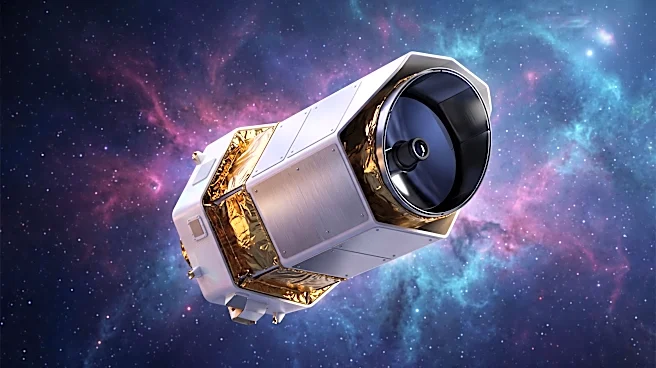
NASA has announced the selection of PRIMA (the Probe far-Infrared Mission for Astrophysics), a new space telescope designed to explore the cold, dusty universe in far-infrared light. This $1 billion observatory will be developed and operated by the Jet
Propulsion Laboratory (JPL), which Caltech manages for NASA. Caltech's IPAC will serve as the mission science center, responsible for data processing, archiving, and scheduling astronomer time. PRIMA is NASA's first "probe-class" astrophysics mission, a category recommended by the Astro 2020 Decadal Survey to bridge the gap between smaller Explorer-class missions and larger flagship missions. The mission aims to unveil cosmic objects and events at wavelengths currently invisible to existing telescopes, with a launch target in the 2030s. The telescope and its detectors will be cryogenically cooled to significantly reduce thermal noise, making it orders of magnitude more sensitive than previous far-infrared space missions.
Why It's Important?
The PRIMA mission represents a significant advancement in astrophysics, offering an unprecedented view into the deep universe. Its enhanced sensitivity and sharp imaging capabilities will enable breakthrough science on fundamental cosmic processes. This includes understanding the formation of planets, stars, and black holes, as well as tracing the evolution of galaxies and the origins of water on Earth. By studying the universe in far-infrared light, PRIMA will provide crucial data that complements observations from other telescopes like the James Webb Space Telescope, offering a more comprehensive picture of cosmic history. The mission's focus on less-explored far-infrared wavelengths promises a thousand-fold leap in sensitivity, which is a rare and impactful development in astronomy. This will allow scientists to investigate the origins of planetary atmospheres, the evolution of galaxies and supermassive black holes, and the formation of dust and heavy elements.
What's Next?
Following its selection, PRIMA will now advance into detailed design and technology maturation phases, with a targeted launch date in the 2030s. NASA is expected to release further details regarding mission milestones, potential international partnerships, and opportunities for the broader scientific community in the coming months. Once fully operational, approximately 75 percent of PRIMA's observing time will be made available to the general science community through a peer-review proposal process. The mission has already garnered significant interest, with nearly 200 ideas for data utilization submitted by over 400 astronomers. This indicates a strong scientific community eager to leverage PRIMA's unique capabilities to address long-standing questions in astrophysics and cosmology.
Beyond the Headlines
The development of PRIMA highlights the long-term commitment of institutions like Caltech and JPL to pushing the boundaries of space exploration and scientific discovery. The mission relies on detector technology pioneered by Caltech's Jonas Zmuidzinas and JPL engineer Rick LeDuc, demonstrating the critical role of sustained research and development in enabling future space missions. The collaboration between academic institutions, NASA centers, and potentially international partners underscores the complex and interconnected nature of modern scientific endeavors. Furthermore, PRIMA's ability to study molecular outflows in galaxies will provide insights into how galaxies grow and evolve, including periods of intense star formation and the activity of central supermassive black holes. This mission will not only expand our understanding of the universe but also inspire future generations of scientists and engineers.