


What's Happening?
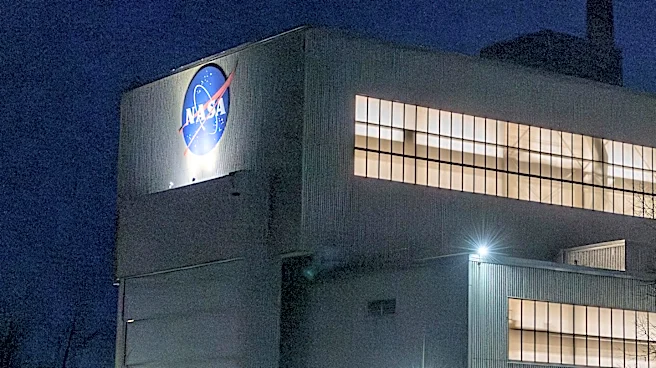
NASA has inaugurated its first major new wind tunnel in over 40 years, the Flight Dynamics Research Facility (FDRF), at the Langley Research Center in Hampton, Virginia. This facility replaces two older Langley tunnels, the 20-Foot Vertical Spin Tunnel
and the 12-Foot Low-Speed Tunnel, which had been in operation since 1941 and 1939, respectively. The FDRF features a 20-foot-wide test chamber where four 750-horsepower motors drive fans to push air upwards at speeds up to 117 mph. This vertical airflow allows engineers to test models of aircraft and spacecraft in free-flight conditions, simulating stalls, spins, and atmospheric entry without physical restraints. The facility integrates major test rigs, instruments, and data systems from its predecessors, aiming to reduce costs and development time. This new wind tunnel is designed to provide a physical environment for testing that complements computational fluid dynamics (CFD) simulations, offering real-world data on how air interacts with objects.
Why It's Important?
The opening of the FDRF is a significant development for U.S. aerospace and defense. While computer simulations (CFD) are crucial for initial design, physical wind tunnels provide empirical data that validates and refines these simulations. The ability to conduct free-flight tests in a vertical wind tunnel allows engineers to safely study dangerous flight conditions, such as stalls and spins, which are critical for aircraft safety and performance. This capability is vital for the development of next-generation aircraft, including experimental X-planes, drones, and autonomous vehicles, as well as for spacecraft designed for atmospheric entry and landing on Earth and other celestial bodies like Mars, Venus, and Titan. The facility's enhanced capacity for larger models and higher airspeeds means more detailed and instrumented testing, directly impacting the reliability and safety of future U.S. aerospace innovations and missions, including the Artemis program.
What's Next?
The FDRF is expected to immediately support ongoing research and development for various U.S. aerospace projects. This includes continued work on NASA's X-59, an experimental aircraft aimed at demonstrating quieter supersonic flight, and the aeroshell for the Dragonfly mission to Saturn's moon Titan. The facility will also be instrumental in advancing entry, descent, and landing technologies for the Artemis program, which focuses on returning astronauts to Earth safely. Researchers will utilize the FDRF to study parachute systems and the aerodynamic behavior of novel aircraft designs. The integration of modern cameras, sensors, and instrumentation will allow for more precise data collection, leading to faster iteration and optimization of designs. The facility's long operational lifespan is anticipated to support multiple generations of aerospace technology, ensuring the U.S. remains at the forefront of aviation and space exploration.
Beyond the Headlines
The FDRF represents more than just a technological upgrade; it underscores the enduring importance of physical experimentation in an increasingly digital design landscape. While computational fluid dynamics offers efficiency, the new wind tunnel provides an invaluable reality check, revealing complex aerodynamic phenomena that simulations might miss or simplify. This blend of virtual and physical testing fosters a deeper understanding of aerospace dynamics, pushing the boundaries of what's possible in aircraft and spacecraft design. The facility also carries forward a legacy of expertise from its predecessor tunnels, highlighting the continuous accumulation of knowledge and skill within NASA. This commitment to hands-on research ensures that future U.S. aerospace endeavors are built on a foundation of rigorous testing and validated performance, contributing to national security, economic competitiveness, and scientific advancement.