







What's Happening?
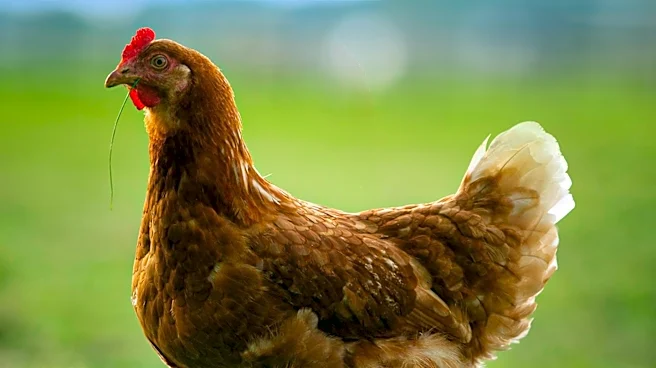
As climate change continues to impact agricultural practices, native poultry breeds are being recognized for their resilience to heat stress, which affects growth, reproduction, and overall productivity. In Spain, several autochthonous breeds are part
of a conservation program aimed at preserving genetic diversity and improving heat tolerance. These breeds, such as the Castellana Negra and Andaluza Franciscana, are being studied for their ability to withstand high temperatures while maintaining productivity. The integration of circular agriculture principles, including the use of traditional protein crops and beekeeping, is proposed to enhance sustainability in poultry production. This approach aims to reduce dependency on imported feedstuffs and promote environmental monitoring through bee pollination services.
Why It's Important?
The preservation and promotion of native poultry breeds are crucial for maintaining genetic diversity and ensuring food security in the face of climate change. These breeds offer a sustainable alternative to high-yielding commercial lines, which often lack resilience to environmental stressors. By focusing on genetic selection for heat tolerance, the poultry industry can adapt to changing climates and reduce economic losses associated with heat stress. Additionally, implementing circular agriculture practices can lead to more sustainable production systems, reducing reliance on imported feeds and minimizing environmental impact. This shift could benefit producers, consumers, and the environment by promoting local resources and enhancing resilience.
What's Next?
Future efforts may focus on crossbreeding commercial lines with native breeds to combine high productivity with heat resilience. The Spanish Ministry of Agriculture, Fisheries and Food is promoting initiatives like the '100% Autochthonous Breed' label to differentiate products and support market demand for sustainable poultry. Stakeholders, including governments and producers, are encouraged to collaborate on innovative solutions to enhance the sustainability of poultry production systems. Continued research and development in genetic selection and circular agriculture practices will be essential to address the challenges posed by climate change.
Beyond the Headlines
The emphasis on native breeds highlights the ethical considerations of preserving biodiversity and cultural heritage in agriculture. As global markets favor high-yielding breeds, the risk of losing genetic diversity increases, potentially compromising long-term sustainability. The integration of beekeeping into poultry systems not only supports pollination but also serves as a model for environmental stewardship, showcasing the interconnectedness of agricultural practices and ecosystem health. These developments may inspire broader adoption of circular agriculture principles across other sectors, promoting holistic approaches to food production.