






What's Happening?
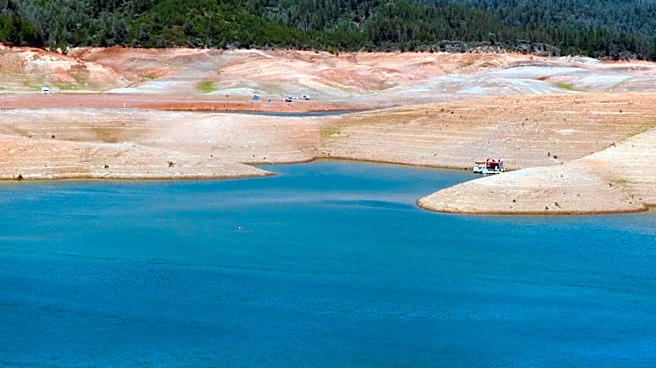
The Colorado River, a crucial water source for millions in California and six other states, is experiencing severe shortages due to a prolonged megadrought and climate change. The river's flow has significantly decreased over the last 25 years, with reservoirs
like Lake Mead and Lake Powell nearing record lows. California, which uses more water from the Colorado River than any other state, is under pressure to reduce consumption as the river's reservoirs shrink. The river is a major source of water throughout Southern California, providing nearly a fourth of what flows from taps in the region's cities. The situation is exacerbated by the fact that the water was originally divided among the states in 1922 under an agreement that over-promised what the river could provide.
Why It's Important?
The dwindling water levels of the Colorado River have significant implications for agriculture, urban water supply, and environmental sustainability in the western United States. As the river's flow continues to decrease, states that rely heavily on its water are facing urgent pressure to cut back on usage. This situation could lead to increased water costs, reduced agricultural output, and heightened tensions among states over water rights. The crisis highlights the broader challenges posed by climate change and the need for sustainable water management practices.
What's Next?
Negotiations among the seven states that rely on the Colorado River are ongoing, with the federal government potentially stepping in to impose water cuts. The Trump administration is preparing its own plan to address the crisis, which may include larger mandatory water cutbacks. The outcome of these negotiations and federal interventions will be crucial in determining how water resources are managed in the region moving forward.