

What's Happening?
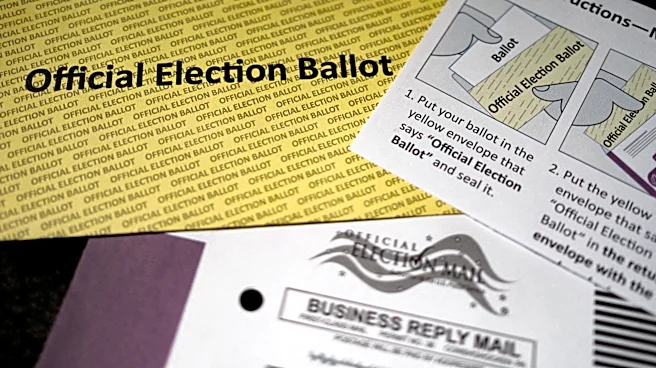
A whistleblower from the U.S. Postal Service (USPS) has raised concerns about the rushed and potentially flawed implementation of an executive order issued by President Trump. This order, signed in March, mandates that the USPS send mail ballots only
to voters on state citizenship lists developed by U.S. Citizenship and Immigration Services and the Social Security Administration. Additionally, ballot envelopes must comply with new USPS rules and include bar codes. Senator Richard Blumenthal, a Democrat, released the whistleblower's statement, which contends that the hastily built computer system designed to implement this order could disenfranchise millions of Americans by leading to the rejection of a significant number of mail ballots. While a U.S. District Court Judge initially barred the system's implementation before the November midterms, the Supreme Court's conservative majority later overruled this, temporarily clearing the way for its rollout. The USPS released a final rule outlining implementation on August 21.
Why It's Important?
The alleged rushed and sloppy implementation of President Trump's executive order on mail voting carries significant implications for the integrity and accessibility of the U.S. electoral process. If the whistleblower's claims are accurate, a substantial portion of the electorate, particularly those relying on mail-in ballots, could face disenfranchisement due to system errors or non-compliance with new, complex rules. This could disproportionately affect certain demographics and create widespread confusion and distrust in election outcomes. The legal battles surrounding this order, involving federal courts and the Supreme Court, highlight the deep partisan divisions over voting procedures and the role of federal agencies in election administration. The potential for a flawed system to impact the upcoming midterms underscores the critical need for robust and reliable voting mechanisms, especially as mail voting has become increasingly prevalent.
What's Next?
The future of the mail voting system outlined in President Trump's executive order remains uncertain. While the Supreme Court temporarily cleared the way for its implementation, the ruling did not address the legality of the order itself. The administration is appealing the federal judge's ruling that temporarily halted the directive, suggesting that the issue may return to the U.S. Supreme Court for a definitive decision. Meanwhile, the U.S. Postal Service is proceeding with the rollout of the new computer system, despite the whistleblower's warnings of potential errors and disenfranchisement. Civil rights groups and Democrats are likely to continue their legal challenges and advocacy efforts to ensure fair and accessible voting. The ongoing legal and operational uncertainties could lead to further delays, modifications, or even a complete halt to the system, depending on future court decisions and political developments.
Beyond the Headlines
Beyond the immediate concerns of election administration, the controversy surrounding President Trump's executive order on mail voting touches upon deeper issues of federal power, states' rights, and the balance between election security and voter access. The order's requirement for state citizenship lists and new USPS rules represents a significant federal intervention into what has traditionally been a state-administered process. This raises questions about the extent to which the federal government can dictate voting procedures and the potential for such directives to override state-specific election laws. Furthermore, the debate highlights the ongoing tension between efforts to prevent voter fraud and concerns about voter suppression. The whistleblower's allegations of a system designed to disenfranchise voters, whether intentional or not, underscore the ethical imperative for transparent, secure, and accessible electoral processes that inspire public confidence rather than erode it.