



What's Happening?
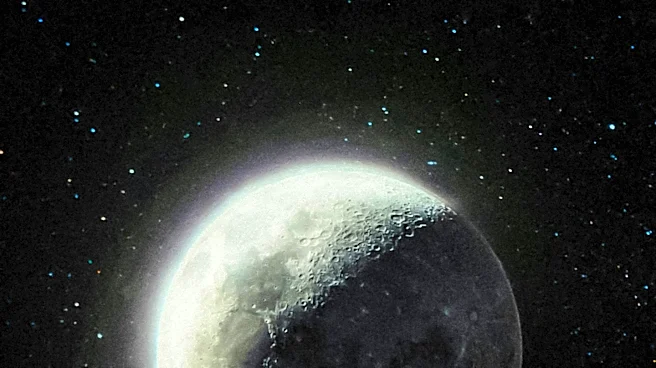
On Thursday, September 3, 2026, the Moon will be positioned in the constellation Taurus, offering observers a chance to see it near the Pleiades star cluster (M45) and the ice giant Uranus. Early in the morning, around 5 A.M. CDT, the waning Moon will skim
the northern regions of the Pleiades, a process expected to last approximately two hours. From certain locations, particularly the western U.S., an occultation of the 6th-magnitude star 18 Tauri by the Moon will be visible. Uranus, shining at magnitude 5.7, will be located about 6.8 degrees southeast of the Pleiades and approximately 4 degrees northwest of Epsilon (ε) Tau. Binoculars or a telescope will likely be needed to clearly observe Uranus's small, gray disk.
Why It's Important?
This celestial event provides a unique opportunity for amateur astronomers and skygazers across the U.S. to observe multiple astronomical phenomena simultaneously. The close proximity of the Moon to the Pleiades and Uranus offers a visually engaging spectacle, especially for those with optical aid. Occultations, though localized, are particularly significant as they allow for precise measurements and observations of stellar characteristics. Events like these foster public interest in science and astronomy, encouraging individuals to engage with the night sky and potentially inspiring future scientific pursuits. For educational institutions, it serves as a practical example for teaching celestial mechanics and observational astronomy.
What's Next?
Observers in the western U.S. should prepare to watch for the occultation of 18 Tauri by the Moon, with the star disappearing behind the lunar limb just before 3:45 A.M. PDT and reappearing about an hour later. Regardless of location, Uranus will be visible in the early morning sky, rising about an hour before midnight and being well above the eastern horizon by 3 A.M. local daylight time. Binoculars or a telescope are recommended for optimal viewing of Uranus. Astronomy enthusiasts can consult local astronomy clubs or online resources for more precise viewing times and tips tailored to their specific geographic location.
Beyond the Headlines
Beyond the immediate observation, events like the Moon's passage through Taurus highlight the dynamic and ever-changing nature of our solar system. The ability to predict and observe such precise celestial alignments underscores the advancements in astronomical science and the enduring human fascination with the cosmos. It also serves as a reminder of the vastness of space and our place within it, echoing sentiments expressed by astrophysicists about the humbling experience of viewing distant celestial bodies. These events can inspire a sense of wonder and encourage a deeper appreciation for scientific inquiry and the natural world.