







What's Happening?
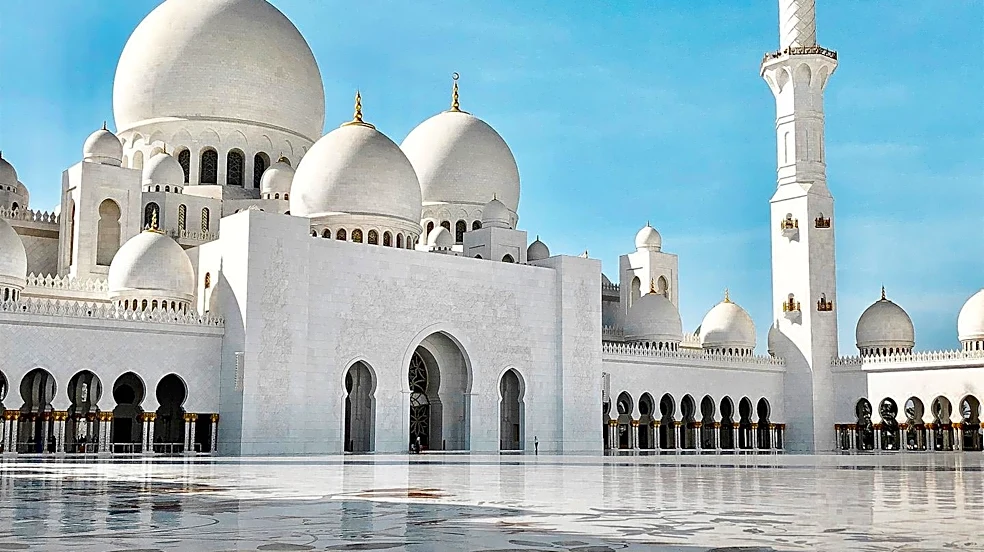
A study published in Frontiers in Built Environment examines the evolution of architectural restraint in mosque design within the United Arab Emirates (UAE). The research identifies four overlapping modes: vernacular restraint, modernist and regional-modernist
abstraction, historicist and neo-Islamic representation, and contemporary minimalism. While these modes coexist, their prominence shifts over time. Historically, mosques like Al Bidya and Al Shoyoukh exhibited restraint due to material availability, climate, local construction knowledge, modest scale, and ritual requirements, characterized as an 'architecture of sufficiency.' Modernization saw restraint persist as deliberate abstraction, exemplified by King Faisal Mosque. More recently, projects such as Al Warqa’a Mosque and the Mohamed Abdulkhaliq Gargash Mosque demonstrate 'Performative Minimalism,' where reduction is a deliberate design choice. This framework suggests that withholding certain architectural signs elevates the hierarchy of retained elements, linking reduction to intended effects like calm or legibility in a global context.
Why It's Important?
This shift in architectural philosophy, particularly the rise of 'Performative Minimalism,' reflects broader cultural and societal changes within the UAE and potentially influences design trends globally. For U.S. architects, designers, and urban planners involved in international projects or those seeking inspiration from diverse architectural movements, understanding this nuanced approach to minimalism is crucial. It highlights how cultural and religious structures are adapting to contemporary aesthetics while maintaining their core functions and spiritual significance. The emphasis on deliberate reduction and the strategic use of architectural signs to convey specific messages could inform design principles in various sectors, from public buildings to commercial spaces, where clarity, impact, and cultural sensitivity are paramount. This trend also underscores a potential global movement towards more thoughtful and intentional design, moving beyond mere aesthetic simplicity to a deeper engagement with purpose and audience perception.
What's Next?
The study suggests that the apparent return of simplicity in UAE mosque architecture reactivates restraint under transformed conditions. This trend is likely to continue influencing future architectural projects in the region, with designers further exploring how minimalist principles can convey complex cultural and spiritual messages. The research also identifies a potential risk: that minimalism could become a homogenized aesthetic detached from local material culture. Future developments will likely involve a balance between embracing contemporary minimalist design and preserving the unique cultural and historical context of the UAE. This could lead to further academic discourse and practical applications exploring how to integrate modern design with local heritage, potentially fostering new architectural styles that are both globally relevant and locally authentic.
Beyond the Headlines
The concept of 'Performative Minimalism' extends beyond mosque architecture, offering a lens through which to analyze design in various cultural and functional contexts. It challenges the notion of minimalism as merely an absence of ornamentation, instead framing it as a deliberate act of communication where every retained element carries heightened significance. This approach has ethical implications, as it requires designers to be acutely aware of the messages their reduced forms convey and the audience they are addressing. Culturally, it reflects a sophisticated understanding of how design can shape experience and perception, moving beyond superficial aesthetics to create environments that evoke specific emotional and intellectual responses. This deeper engagement with minimalism could influence how public spaces, art installations, and even product design are conceived, emphasizing intentionality and impact over mere visual appeal.