



What's Happening?
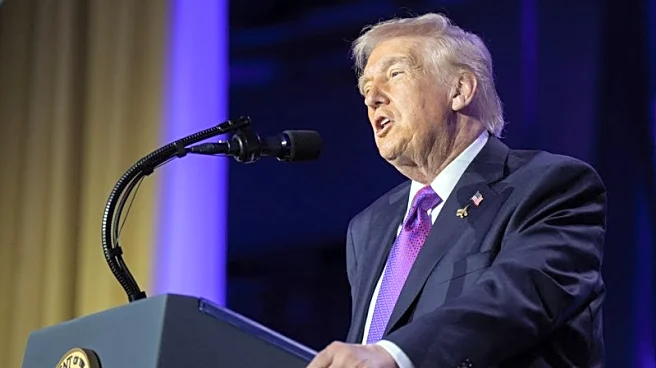
President Trump has proposed a 10% cap on credit card interest rates for one year, a move that has garnered bipartisan support but faces opposition from credit card issuers. The proposal aims to alleviate the financial burden on Americans who are struggling
with high credit card debt, which has reached record levels. Currently, credit card interest rates average over 20%, according to Federal Reserve statistics. The proposed cap is intended to begin on January 20, 2026, marking the one-year anniversary of President Trump's second inauguration. While the proposal has received backing from lawmakers such as Republican Sen. Josh Hawley and independent Sen. Bernie Sanders, credit card issuers and banking groups warn that such a cap could reduce credit availability, particularly for riskier borrowers.
Why It's Important?
The proposed cap on credit card interest rates is significant as it addresses the growing concern over consumer debt in the U.S. With Americans owing a total of $1.23 trillion in credit card balances, the cap could potentially reduce financial strain for many households. However, opponents argue that it could lead to reduced credit availability, forcing consumers to turn to less regulated and potentially more expensive alternatives like payday lenders. The debate highlights the tension between consumer protection and the financial industry's operational realities. If implemented, the cap could reshape the credit card market, affecting millions of consumers and financial institutions.
What's Next?
The next steps involve potential legislative action or executive measures to enforce the proposed cap. President Trump has not specified whether he will pursue executive action or rely on voluntary compliance from credit card issuers. The proposal's future will likely depend on negotiations with Congress and the response from the financial industry. Additionally, President Trump is expected to nominate a new Federal Reserve chair, which could influence broader monetary policy decisions impacting interest rates.