






What's Happening?
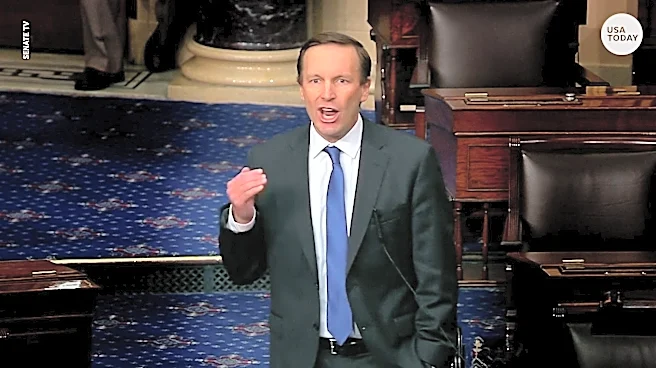
Senator Chris Murphy (D-Conn.) has been hospitalized after suffering a stroke. According to a statement from his chief of staff, Allison Herwitt, Senator Murphy began experiencing numbness in his arm on Saturday while at his son's hockey game. He was
subsequently taken to a local hospital where the stroke was diagnosed. Senator Murphy has since been transferred to Johns Hopkins for further monitoring and is reportedly responding well to treatment, remaining awake and alert. Doctors are optimistic about his progress and expect a full recovery. The 53-year-old senator, who was elected to the House in 2006 and the Senate in 2012, serves on the Appropriations Committee and is a prominent voice on immigration and gun restrictions. He is not up for re-election in the upcoming Tuesday ballot.
Why It's Important?
The hospitalization of Senator Chris Murphy due to a stroke is a significant health event for a sitting U.S. Senator. While his office has expressed optimism for a full recovery, any health issue affecting a lawmaker can have implications for their legislative duties and potential future political roles. Senator Murphy is considered a rising figure within the Democratic Party, with potential for senior leadership positions in the Senate and even a possible presidential candidacy in 2028. His temporary absence or any long-term health impacts could affect legislative efforts on key issues he champions, such as gun control and immigration. This event also brings attention to the health of public officials, particularly given that several other Democratic senators, including Ben Ray Lujan, Chris Van Hollen, and John Fetterman, have also experienced strokes in recent years, highlighting the demanding nature of public service.
What's Next?
Senator Murphy will remain hospitalized for further monitoring and treatment, with his office indicating a positive outlook for his recovery. The immediate focus will be on his health and rehabilitation. While he is not on the ballot this election cycle, his return to full legislative duties will be closely watched. His colleagues from both parties have offered support and well wishes, underscoring the bipartisan concern for his well-being. The experience of other senators who have recovered from strokes, such as Senator Van Hollen, suggests that a full return to work is possible. However, the timeline for his complete recovery and resumption of his full responsibilities remains to be seen. His staff will likely manage his office operations during his recovery period, ensuring continuity in his constituent services and legislative work.
Beyond the Headlines
Senator Murphy's stroke, following similar incidents with other senators, subtly underscores the intense pressures and demanding schedules faced by high-ranking public officials. The physical and mental toll of constant travel, long working hours, and high-stakes decision-making can be immense. This series of health events among senators might prompt broader discussions about the support systems available to lawmakers and the overall well-being of individuals in demanding public roles. It also highlights the human element behind political figures, reminding the public of their vulnerability to health challenges. For Senator Murphy, a full recovery would not only be a personal triumph but also a testament to modern medical advancements and resilience in public life, potentially inspiring others facing similar health crises.