



What's Happening?
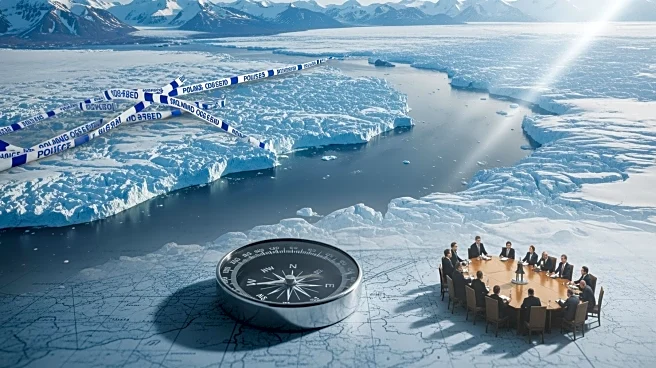
Greenland's geopolitical significance is rising as the Arctic region becomes a focal point for global powers. President Trump has expressed interest in acquiring Greenland, citing economic and security reasons. This interest has led to increased tensions
within NATO, as Denmark and other European allies have bolstered their military presence on the island. Greenland, an autonomous territory within the Kingdom of Denmark, has long sought greater independence. The U.S. already operates a military base in Greenland, and the current administration's focus on the Arctic reflects a broader strategy to expand commercial access and defense capabilities in the region.
Why It's Important?
The Arctic's strategic importance is growing due to climate change, which is opening new commercial and military opportunities. The U.S. interest in Greenland highlights the region's potential for resource extraction and military expansion. However, this interest has strained relations with NATO allies, particularly Denmark, which oversees Greenland's foreign policy and defense. The situation underscores the delicate balance between national security interests and international alliances. The U.S. must navigate these tensions carefully to maintain its influence in the Arctic while respecting the sovereignty of its allies.
What's Next?
The U.S. is likely to continue its efforts to strengthen its presence in the Arctic, potentially expanding its military operations in Greenland. This could involve negotiating with Denmark to increase access to resources and strategic locations. Meanwhile, Greenland's push for greater independence may gain momentum, as the island seeks to leverage its strategic position to negotiate better terms with both Denmark and the U.S. The evolving geopolitical landscape in the Arctic will require careful diplomacy to avoid escalating tensions with NATO allies and other global powers.
Beyond the Headlines
The focus on Greenland also highlights the broader implications of climate change, as melting ice opens new shipping routes and resource extraction opportunities. This environmental shift is reshaping global power dynamics, with countries like Russia and China also eyeing the Arctic for strategic gains. The U.S. must consider the long-term environmental and geopolitical impacts of its Arctic strategy, balancing immediate security concerns with sustainable development and international cooperation.