

What's Happening?
Mexican officials expressed concern over the recent closure of airspace over El Paso, Texas, fearing it signaled a potential U.S. military incursion into Mexico. The closure, which lasted for a brief period, was initially perceived as a prelude to a unilateral
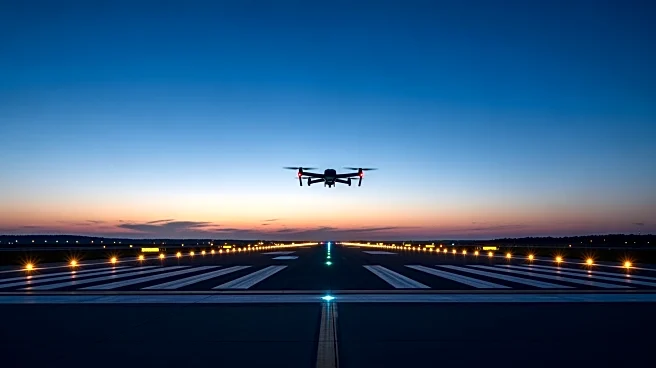
raid against a drug kingpin in Chihuahua state, just across the border. U.S. officials, however, described the closure as a national security measure, citing the neutralization of a cartel-operated drone. The incident follows heightened tensions after the U.S. captured Venezuelan President Nicolás Maduro, raising fears of similar actions in Mexico. Mexican security minister Omar García Harfuch contacted U.S. officials, who assured him the closure was unrelated to any raid in Mexico. The airspace was reopened after the perceived threat was neutralized, reportedly involving a Mylar party balloon mistaken for a drone.
Why It's Important?
The incident underscores the delicate balance in U.S.-Mexico relations, particularly concerning security and sovereignty issues. The closure of airspace over a major U.S. city like El Paso highlights the ongoing challenges in managing cross-border security threats, such as cartel-operated drones. For Mexico, the fear of U.S. military action on its soil without consent raises significant sovereignty concerns. The situation also reflects broader geopolitical tensions, as the U.S. continues to exert pressure on drug cartels and related criminal activities. The incident could impact future security cooperation between the two nations, as Mexico seeks to maintain its sovereignty while addressing shared security challenges.
What's Next?
Moving forward, both countries may need to enhance communication and coordination to prevent misunderstandings that could escalate into diplomatic conflicts. The U.S. and Mexico might explore joint efforts to address the use of drones by criminal organizations, potentially leading to new bilateral agreements or security protocols. Additionally, the incident could prompt discussions on the broader implications of U.S. military actions in Latin America, particularly in relation to drug trafficking and organized crime.