
What's Happening?
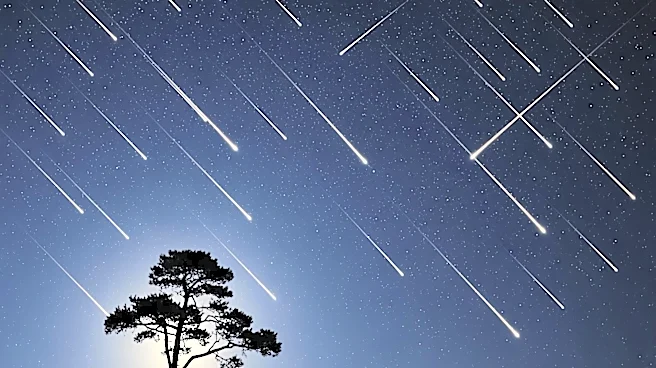
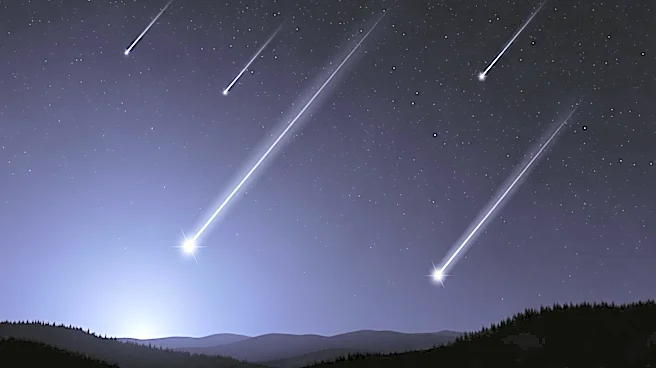
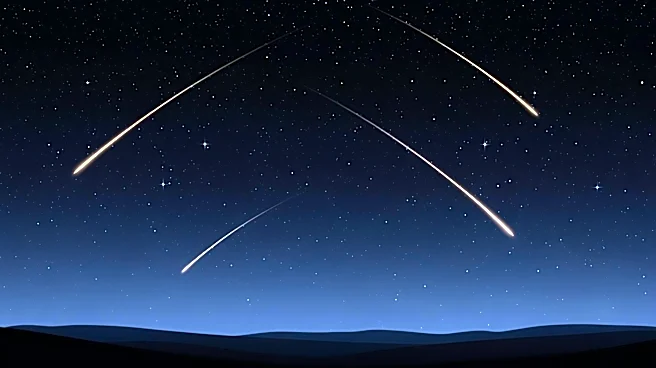
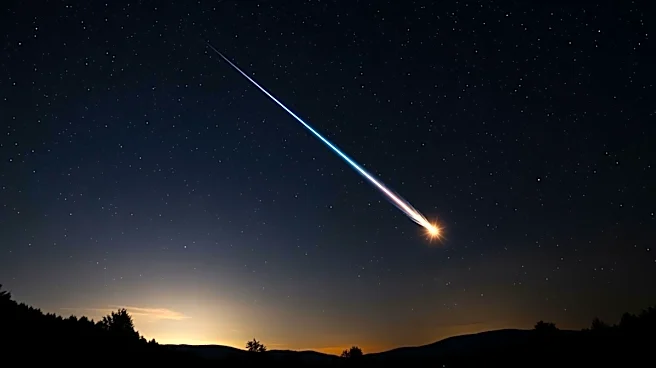
The Lyrid meteor shower is set to peak tonight, providing a dazzling display of shooting stars. The shower, which has been active since April 14, will reach its peak in the early hours of April 22. Observers
can expect to see up to 20 meteors per hour under ideal conditions. The best viewing time is after midnight when the moon sets, leaving the sky dark and optimal for meteor watching. Skywatchers are advised to find a dark location away from city lights, allow their eyes to adjust, and look towards the northeastern sky for the best view.
Why It's Important?
The Lyrid meteor shower is a significant astronomical event, marking the end of a months-long period without visible meteors. It provides an opportunity for people to connect with the natural world and experience the wonders of the universe. The event also highlights the importance of preserving dark skies, free from light pollution, to ensure that such celestial phenomena can be enjoyed by future generations. Additionally, it serves as an educational moment, encouraging interest in astronomy and science.
What's Next?
Following the Lyrid meteor shower, the Eta Aquarids will become active, peaking in early May. This shower, caused by debris from Halley's Comet, will offer another chance for skywatchers to observe meteors. As public interest in astronomy grows, these events may lead to increased participation in stargazing activities and educational programs, fostering a greater appreciation for space science.