
What's Happening?
A recent study has developed a framework for predicting menstrual recovery using machine learning models and wearable technology. The research focuses on secondary amenorrhea, a condition affecting reproductive,
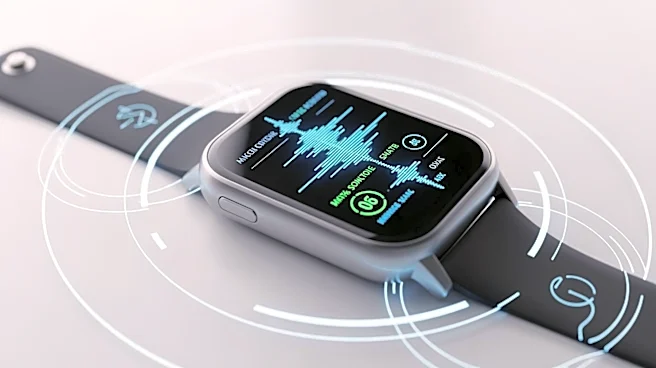
cardiovascular, and bone health. The study utilizes a synthetic dataset of 5,000 individuals, incorporating physiological features such as heart rate variability, resting heart rate, sleep, physical activity, skin temperature, perceived stress, age, and duration of amenorrhea. Twelve machine learning models were evaluated for their ability to predict menstrual recovery within three months. The models were tested using both baseline and longitudinal data configurations, with ensemble methods like TabPFN, AdaBoost, and XGBoost showing the highest performance. The study highlights the potential of integrating wearable-derived data into health monitoring systems, although real-world clinical validation is still required.
Why It's Important?
This development is significant as it represents a step forward in personalized healthcare, particularly for conditions like secondary amenorrhea that have broader health implications. By leveraging wearable technology and machine learning, healthcare providers could potentially offer more accurate and timely interventions. This approach could lead to improved patient outcomes and more efficient healthcare delivery. The integration of non-invasive monitoring tools into everyday health management could also empower individuals to take proactive steps in managing their health. Furthermore, the use of synthetic data in this study underscores the potential for machine learning to handle complex health conditions, paving the way for future innovations in digital health solutions.
What's Next?
The next steps involve real-world clinical validation of the machine learning models to ensure their effectiveness in practical healthcare settings. Researchers will need to collaborate with healthcare providers to integrate these predictive models into existing health monitoring systems. Additionally, there may be further exploration into refining the models to enhance their accuracy and reliability. Stakeholders, including healthcare technology companies and medical professionals, will likely play a crucial role in advancing this technology. As the models are validated and refined, they could become a standard tool in managing menstrual health and potentially other health conditions.
Beyond the Headlines
The use of wearable technology in health monitoring raises important ethical and privacy considerations. As these devices collect sensitive health data, ensuring data security and user privacy will be paramount. There is also the potential for these technologies to exacerbate health disparities if access is limited to certain populations. Addressing these issues will be crucial as wearable health tech becomes more integrated into healthcare systems. Additionally, the reliance on synthetic data for model training highlights the need for diverse and representative datasets to ensure the models' applicability across different demographics.