

What's Happening?
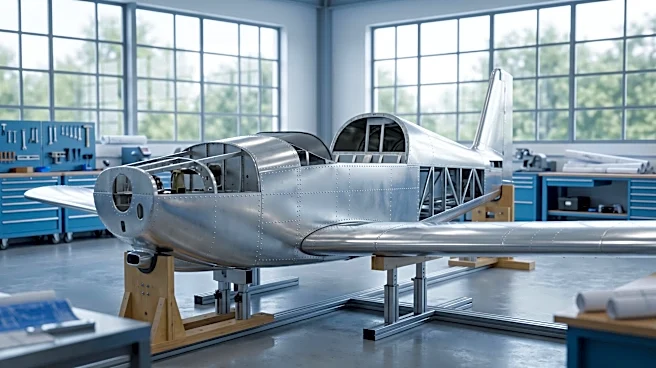
The Aviation Museum of New Hampshire is actively searching for a fourth high school to join its innovative student airplane building program for the 2027-28 school year. This program, which began in 2019 with the Manchester School of Technology, allows
high school students to build a real, flyable two-seat all-metal aircraft as part of a credit-earning course. The completed aircraft are then sold, with proceeds funding the next build. Following the success in Manchester, where students completed their first aircraft in 2022 and a second is awaiting FAA certification, similar programs were established at Lebanon High School in 2024 and Farmington High School in 2025. The museum commits to raising $320,000 in start-up funds for each new program, which then becomes self-funding, and provides trained volunteer mentors.
Why It's Important?
This initiative is important for U.S. education and workforce development, particularly in STEM fields. By providing hands-on experience in aviation and aerospace, the program inspires students to pursue careers in these critical sectors, addressing potential future skill gaps. The program's success in Manchester, with approximately half of its 100 participants pursuing aerospace-related education, jobs, or military service, demonstrates its effectiveness in shaping career paths. It offers a unique blend of practical skills, teamwork, and problem-solving, going beyond traditional classroom learning. For participating schools, it represents an opportunity to offer a cutting-edge educational experience at no direct cost to local taxpayers, fostering innovation and engagement among students.
What's Next?
Interested educational institutions, including public, private, charter, and parochial schools in New Hampshire or in Essex or Middlesex counties in Massachusetts, are invited to submit proposals by Thursday, October 1, 2026. The Aviation Museum of New Hampshire will review these proposals to select the next partner school. Once selected, the museum will commit to raising the necessary start-up funds and providing volunteer mentors. The new program is expected to launch for the 2027-28 school year, with students typically taking two school years to complete an aircraft. The continued expansion of this program will likely lead to more students gaining valuable skills and pursuing careers in aviation and aerospace.
Beyond the Headlines
Beyond its immediate educational benefits, this program has broader implications for fostering a culture of innovation and practical application in U.S. education. It challenges traditional learning models by integrating complex engineering and manufacturing tasks into the high school curriculum, demonstrating that advanced technical skills can be taught effectively at an earlier age. The self-funding model, where completed aircraft are sold to finance future projects, also offers a sustainable framework for specialized educational initiatives. Furthermore, the program's success in inspiring students like Samantha DiMino, who joined the U.S. Air Force after participating, highlights its potential to contribute to national defense and technological advancement by cultivating a skilled and motivated workforce for the aviation industry.