







What's Happening?
Inflation in the U.S. has surged to its highest level in nearly two years, driven by a significant increase in energy prices due to the conflict in Iran. The Labor Department reported a 3.3% rise in consumer prices in March compared to the previous year,
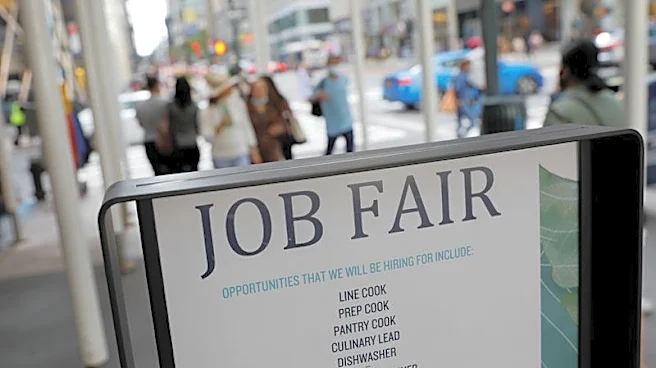
with a 0.9% increase from February. Gasoline prices have risen by more than a dollar per gallon since the conflict began, contributing to the inflation spike. Core inflation, excluding food and energy, was 2.6% in March. The Federal Reserve is cautious about making quick interest rate cuts, given the persistent inflationary pressures. The central bank is also monitoring the job market, which showed signs of recovery in March.
Why It's Important?
The inflation surge presents challenges for the Federal Reserve and the broader U.S. economy. The central bank aims to keep inflation around its 2% target, but the current rate exceeds this goal. The rise in energy prices affects consumer spending and economic growth, with potential implications for monetary policy. The situation is complicated by geopolitical tensions and their impact on global energy markets. The Federal Reserve's response will be critical in managing inflation and supporting economic stability. The inflationary pressures also have political implications, influencing public sentiment and policy decisions.
What's Next?
The Federal Reserve is likely to maintain its current interest rate policy while closely monitoring inflation trends. If inflation does not stabilize, the central bank may consider rate hikes. The impact of the Iran conflict on energy prices will continue to be a key factor in shaping economic policy. The situation's evolution will depend on geopolitical developments and their effects on global energy markets. Policymakers will need to balance inflation control with supporting economic growth and consumer confidence.