






What's Happening?
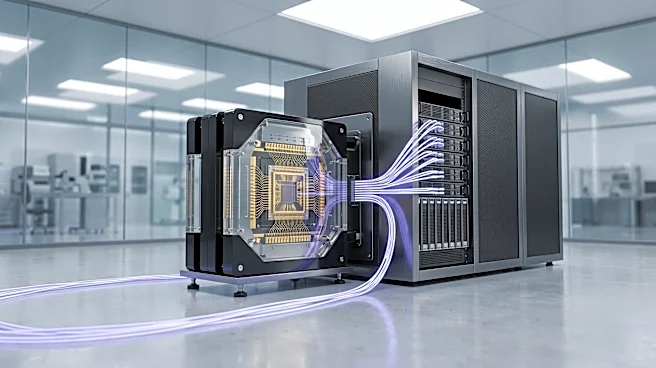
IonQ has announced a contract with Florida International University (FIU) for the deployment of its Superion 256-qubit trapped-ion quantum computer. This agreement establishes FIU as IonQ's flagship academic partner in Florida, marking the state's first
on-premises trapped-ion quantum system. The Superion 256 system, featuring 256 physical trapped-ion qubits, will be housed in a specialized, secure facility on FIU's campus, with installation anticipated in late 2027, following the completion of FIU's on-campus data center. This partnership aims to create a central hub for quantum research and education across the region, providing direct access to one of the most advanced computing architectures globally for FIU's 1,200 faculty members, 56,000 students, and regional industry partners. The scientific applications and research facilitated by this deployment are expected to span material science, artificial intelligence, logistics, cybersecurity, health, and power grid management. FIU President Jeanette M. Nuñez highlighted that this positions FIU researchers at the forefront of national quantum innovation and enables engagement with federal agencies on quantum initiatives.
Why It's Important?
This deployment is a significant step in advancing quantum computing research and workforce development in the United States. By providing direct, on-premises access to a state-of-the-art 256-qubit quantum computer, FIU will become a critical center for innovation, attracting top talent and fostering interdisciplinary collaboration. This initiative will not only accelerate fundamental research in various scientific and engineering fields but also play a crucial role in training the next generation of quantum scientists and engineers. The development of new curricula, degree programs, and certificates in quantum computing will address the growing demand for a skilled workforce in this emerging industry. Furthermore, the partnership strengthens the connection between academic research and federal quantum initiatives, potentially leading to increased funding and strategic collaborations that address national needs in areas like sensing, cryptography, and commercialization. For IonQ, this flagship academic partnership validates its technology and expands its footprint in the educational sector, potentially leading to future commercial opportunities as students and researchers become familiar with their platform.
What's Next?
The immediate next step is the completion of FIU's on-campus data center, followed by the installation of the IonQ Superion 256 system, which is currently expected in late 2027. Once operational, students, faculty, visiting scholars, and affiliated research centers will gain direct access to the system, initiating a wide range of research projects across various disciplines. FIU will also focus on developing new educational programs, including curricula, degree programs, and certificates, to train a skilled workforce for Florida's growing quantum industry. The university's active engagement with federal agencies through its Washington, D.C. research showcase will likely support the partnership and advance national quantum initiatives. This deployment is expected to foster collaborations with industry partners across South Florida and beyond, further integrating quantum computing into practical applications. The success of this partnership could serve as a model for other academic institutions looking to establish quantum computing capabilities and contribute to the national quantum ecosystem.
Beyond the Headlines
The establishment of a major quantum computing hub at FIU has profound implications for regional economic development and national technological competitiveness. It positions Florida as a key player in the burgeoning quantum industry, potentially attracting quantum technology companies, startups, and investment to the state. This could create a ripple effect, fostering a robust innovation ecosystem and generating high-tech jobs. Ethically, the advanced capabilities of quantum computing raise questions about responsible innovation, data privacy, and the potential for dual-use technologies. The focus on workforce development is crucial for ensuring that the benefits of quantum technology are widely distributed and that the U.S. maintains its leadership in this strategic field. Culturally, the presence of such an advanced computing system on campus could inspire a new generation of students to pursue careers in STEM, particularly in quantum science and engineering. This long-term investment in education and research is vital for addressing complex global challenges and maintaining a competitive edge in the global technological landscape.