
What's Happening?
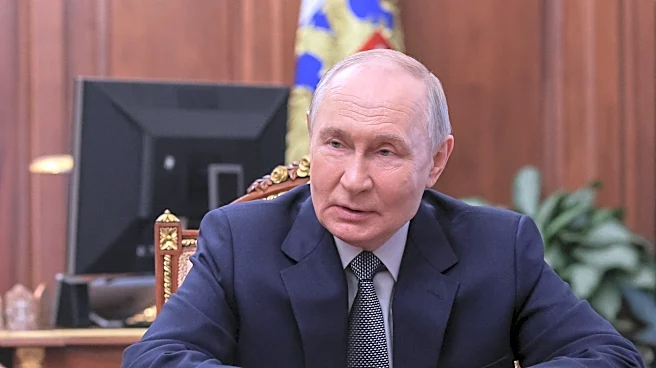
The Kremlin has announced heightened security measures for President Vladimir Putin during the upcoming Victory Day celebrations on May 9, due to perceived threats from Ukraine. Kremlin spokesman Dmitry
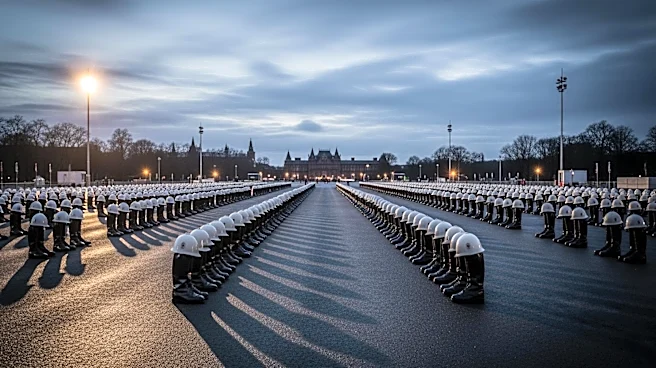
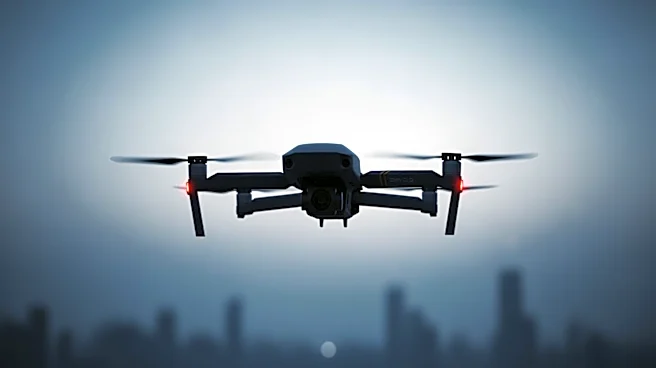
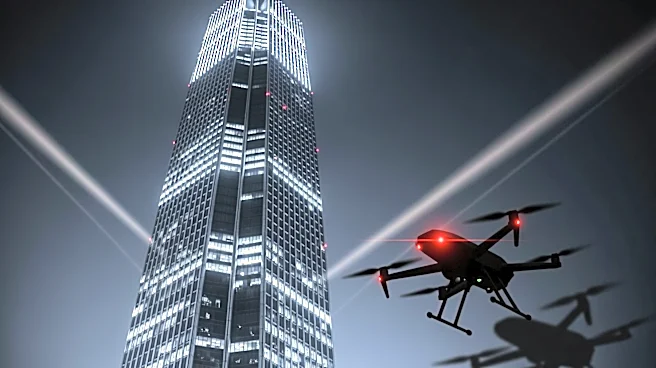
Peskov stated that additional security is customary for major holidays, but this year it is particularly necessary due to what he described as a 'terrorist threat' from Ukraine. The Victory Day parade, which commemorates the anniversary of victory in World War Two, will be scaled back, omitting the usual display of military hardware. This decision follows recent drone attacks near Moscow, including one that struck a high-rise building. Despite these threats, Peskov dismissed reports from Western media about increased security due to fears of a coup or assassination attempt against Putin.
Why It's Important?
The increased security measures highlight the ongoing tensions between Russia and Ukraine, particularly in the context of the ongoing conflict. The scaling back of the Victory Day parade, a significant event in Russia, underscores the impact of these tensions on national events. The situation also reflects broader geopolitical dynamics, as Russia continues to portray its military actions in Ukraine as a continuation of its historical defense against external threats. The Kremlin's response to perceived threats could influence its domestic and international policies, potentially affecting diplomatic relations and security strategies in the region.
What's Next?
As Victory Day approaches, the focus will be on how Russia manages the celebrations amid security concerns. The Kremlin's actions may provoke reactions from Ukraine and other international stakeholders, potentially escalating tensions further. Observers will be watching for any incidents during the celebrations and how Russia might respond. Additionally, the international community will likely scrutinize Russia's narrative and actions, influencing future diplomatic engagements and security policies.