




What's Happening?
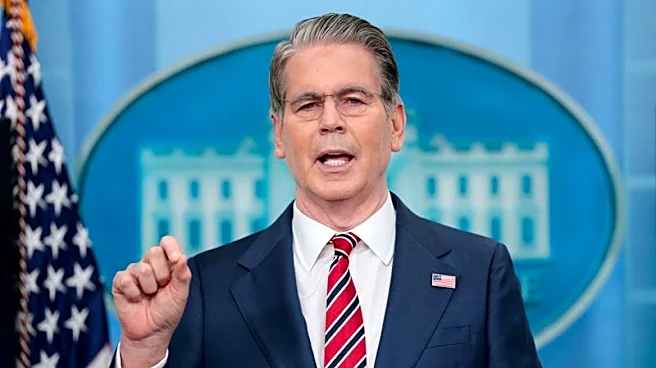
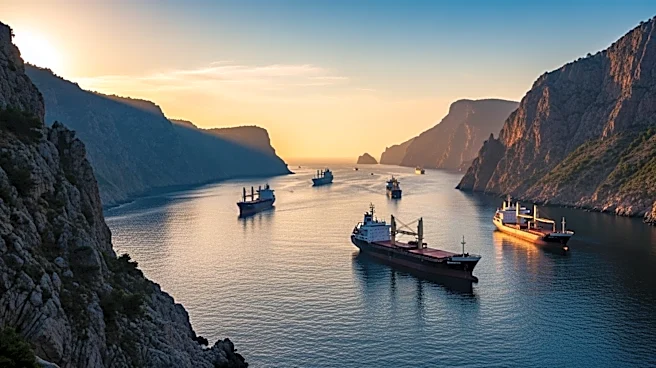
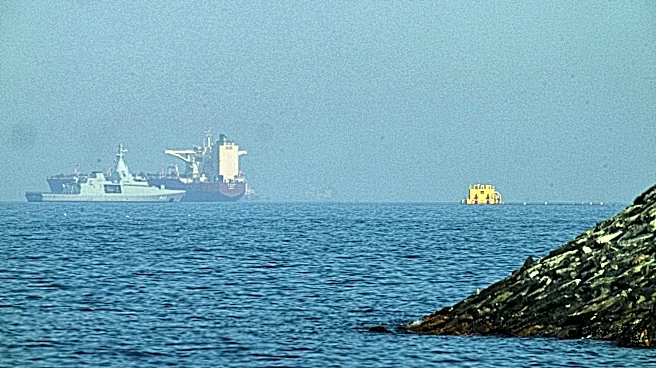
Oil prices have risen as President Trump announced plans to 'free' cargo ships stranded due to the closure of the Strait of Hormuz. This development comes amid ongoing tensions between the U.S. and Iran, which have led to a blockade of this critical energy
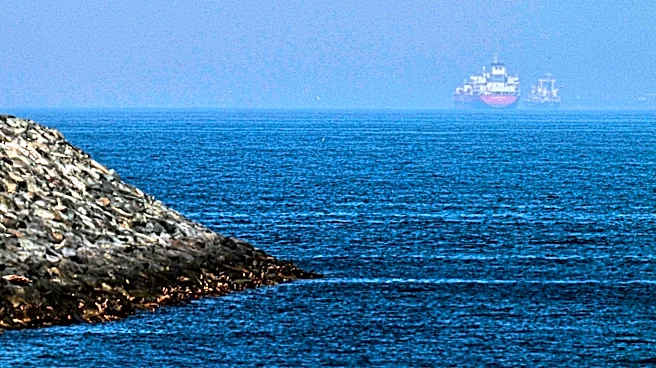
waterway. The Strait of Hormuz is a vital passage for global energy supplies, with about a fifth of the world's energy transiting through it before the conflict. The blockade has significantly disrupted traffic, causing oil prices to fluctuate. Brent crude futures rose by 2.27% to $110.63 per barrel, while U.S. West Texas Intermediate futures increased by 1.98% to $103.96 per barrel. The situation remains tense, as evidenced by reports from the United Kingdom Maritime Trade Operations agency of a tanker being hit by projectiles near Fujairah in the United Arab Emirates.
Why It's Important?
The blockade of the Strait of Hormuz and the subsequent rise in oil prices have significant implications for global energy markets and economies. The strait is a crucial chokepoint for oil transportation, and its closure affects not only the U.S. but also other countries reliant on Middle Eastern oil. Rising oil prices can lead to increased fuel costs, impacting industries and consumers worldwide. The U.S. decision to intervene by attempting to 'free' stranded ships highlights the strategic importance of the strait and the potential for escalating military involvement. This move could stabilize oil prices temporarily but also risks further escalating tensions with Iran, potentially leading to broader geopolitical consequences.
What's Next?
The U.S. is likely to continue its efforts to ensure the safe passage of ships through the Strait of Hormuz. This may involve increased military presence in the region to deter further blockades or attacks on vessels. The international community will be closely monitoring the situation, as any escalation could have widespread economic and political ramifications. Oil-importing countries may seek alternative energy sources or routes to mitigate the impact of the blockade. Additionally, diplomatic efforts may intensify to resolve the conflict and restore stability to the region.