


What's Happening?
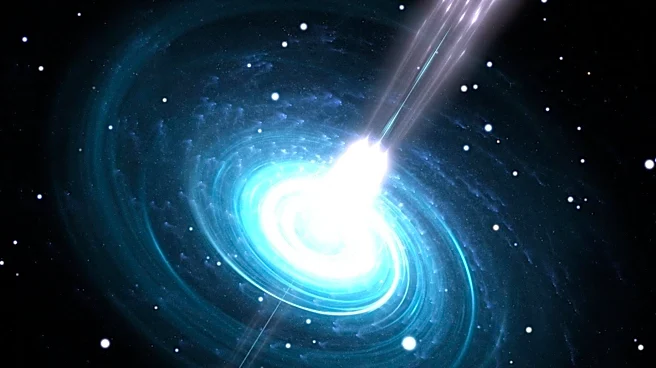
Astronomers have successfully traced a mysterious fast radio burst (FRB), designated FRB 20240304B, that traveled over 10 billion years to reach Earth, setting a new distance record for such phenomena. This discovery, published in Science, has led to the
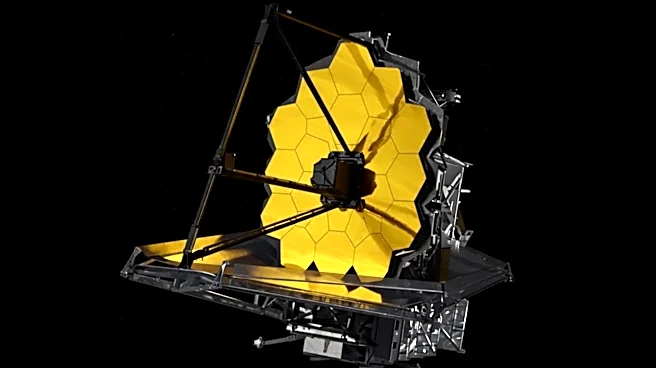
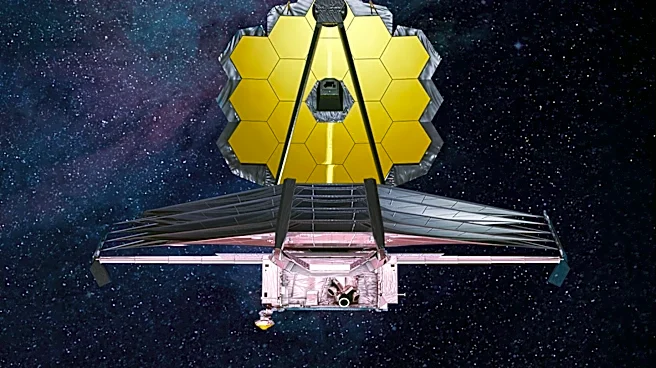
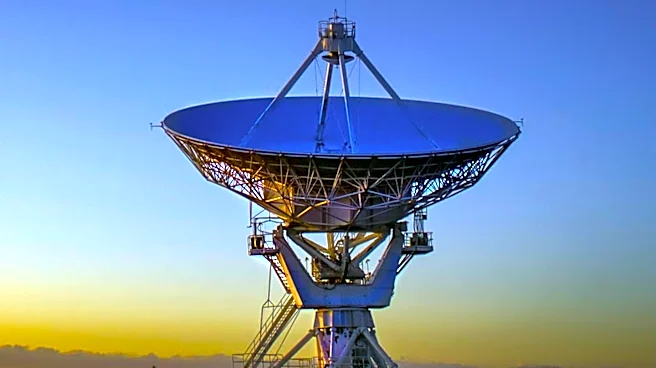
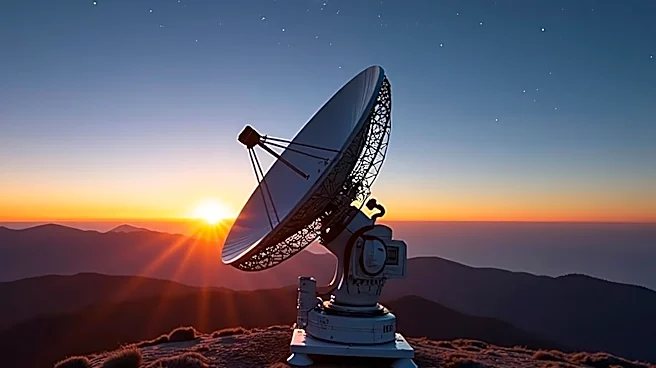
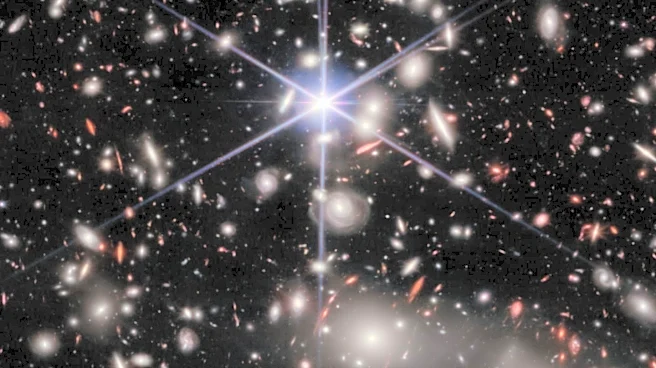
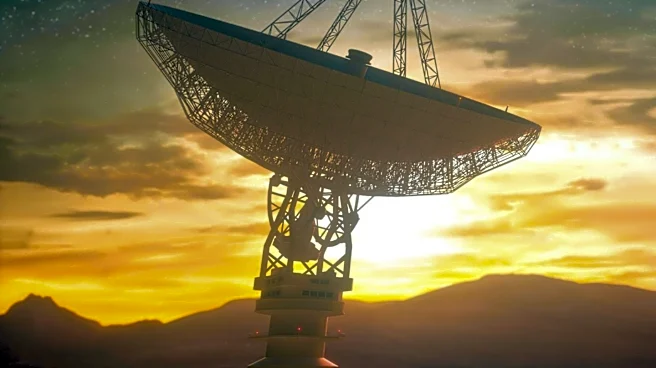
identification of an unexpected galaxy in the early universe and offers a novel method for investigating matter hidden between galaxies. FRBs are intense, millisecond-long flashes of radio waves with unknown origins, making their study challenging as most disappear before their sources can be pinpointed. FRB 20240304B originated when the universe was approximately 3 billion years old, significantly extending the observational reach into an era of substantial galactic growth and transformation. The breakthrough was led by Dr. Manisha Caleb and Dr. Themiya Nanayakkara at the University of Sydney, utilizing the MeerTRAP project with the MeerKAT radio telescope for detection and the James Webb Space Telescope (JWST) for host galaxy identification.
Why It's Important?
This discovery is profoundly important for U.S. and international astronomy, as it provides an unprecedented glimpse into the early universe and the evolution of galaxies. By tracing a signal that traversed 10 billion years, scientists can analyze how radio waves are affected by the intervening matter, offering a unique tool to study regions otherwise difficult to observe. The identification of the host galaxy, a small, metal-poor, and actively star-forming system, provides crucial clues about the environments where FRBs originate and how galaxies and their stellar populations evolve. This research, leveraging advanced observatories like the JWST, enhances our understanding of cosmic history and the fundamental processes that shaped the universe. It also highlights the power of combining different observational techniques to solve complex astronomical puzzles, pushing the boundaries of what is detectable and knowable about the cosmos.
What's Next?
The successful identification of FRB 20240304B's host galaxy demonstrates the immense potential of combining radio and infrared observations for FRB research. Astronomers will continue to use this methodology to detect and characterize more distant FRBs, aiming to build a comprehensive catalog of these events across cosmic time. The next challenge involves not just detecting remote signals but assembling enough well-characterized events to understand how their sources and the intergalactic matter have changed over billions of years. This will involve further observations with instruments like MeerKAT and JWST, as well as the development of new observational techniques. The insights gained will contribute to refining cosmological models and theories about galaxy formation and evolution. Continued research into FRBs could ultimately reveal their mysterious origins, potentially linking them to extreme astrophysical phenomena like neutron stars or black holes.
Beyond the Headlines
Beyond the immediate scientific findings, this discovery underscores the collaborative nature of modern astronomy and the critical role of advanced technological instruments. The James Webb Space Telescope, a joint effort involving NASA, ESA, and CSA, continues to push the boundaries of observational astronomy, revealing previously unseen aspects of the universe. The ability to study the universe at such early stages provides a unique perspective on our cosmic origins and the fundamental laws governing the cosmos. This research also touches upon the philosophical implications of understanding our place in a vast and evolving universe. Each new discovery of this magnitude not only expands scientific knowledge but also inspires public interest in space and science, potentially encouraging future generations to pursue careers in STEM fields. The ongoing quest to unravel the mysteries of FRBs represents humanity's enduring curiosity about the universe and its deepest secrets.