
What's Happening?
The U.S. job market is exhibiting signs that could contribute to increased inflationary pressures, according to recent observations. In October, payrolls expanded by 165,000, while the unemployment rate
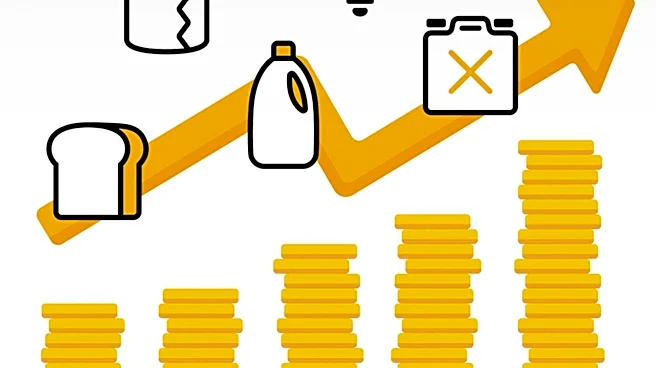
remained stable at 4.1%. Average hourly earnings saw a 0.4% increase month-over-month and a 3.1% rise year-over-year, indicating a firm labor market. This wage growth coincides with a 0.4% increase in the Consumer Price Index (CPI) for October. This suggests that wage growth is no longer diminishing workers' purchasing power, a shift from previous periods where real earnings had declined. Market indicators are now reflecting a potential uptick in inflation, which could influence future policy decisions by the Federal Reserve. The Bureau of Labor Statistics (BLS) is expected to release further data that will provide additional insights into these inflationary trends.
Why It's Important?
This development is significant because a stable labor market with rising wages, coupled with increasing CPI, suggests a potential for sustained inflation. For consumers, while nominal wages are rising, the critical factor is whether these gains outpace inflation to improve purchasing power. The current data indicates that wage growth is no longer reducing purchasing power, which is a positive sign for workers, but it also signals a potential for higher living costs if inflation continues to climb. For businesses, rising wages represent increased labor costs, which could be passed on to consumers through higher prices, further fueling inflation. The Federal Reserve will be closely monitoring these trends, as persistent inflation could necessitate adjustments to monetary policy, potentially impacting interest rates and the broader economy. The interplay between wage growth and inflation is a key indicator of economic health and stability.
What's Next?
Market participants will be closely monitoring upcoming economic data releases from the Bureau of Labor Statistics to assess the trajectory of inflation. Any statements or policy shifts from Federal Reserve officials will also be crucial in shaping market expectations regarding inflation and interest rates. The Federal Reserve's response to these evolving inflation dynamics could include adjustments to interest rates, which would have ripple effects across various sectors of the U.S. economy. Businesses will need to adapt to potentially higher labor costs and consumer spending patterns influenced by inflation. Consumers, in turn, will be watching to see if wage growth can consistently outpace or at least keep pace with rising living costs to maintain or improve their purchasing power.
Beyond the Headlines
The current economic climate highlights a delicate balance the Federal Reserve must maintain: fostering a strong labor market without igniting runaway inflation. The shift where wage growth is no longer reducing workers' purchasing power, while positive for individual households, also presents a challenge for monetary policy. If this trend continues, it could lead to a wage-price spiral, where rising wages push up prices, which in turn leads to demands for higher wages. This cycle could erode the long-term stability of the economy. The situation also raises questions about the effectiveness of current economic models in predicting and managing inflation in a post-pandemic world, where supply chain disruptions and evolving labor market dynamics play a significant role. The long-term implications for economic inequality and the standard of living for average Americans will depend heavily on how these inflationary pressures are managed.