


What's Happening?
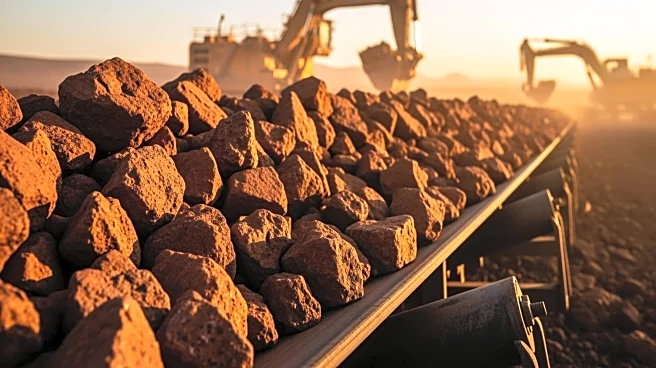
Guinea's Simandou mega mining project, a symbol of the country's economic transformation, is laying off thousands of workers as it begins exporting iron ore. Despite being the world's largest untapped iron ore reserve, the project has faced delays and corruption
scandals. The layoffs come as the project transitions from construction to operational phases, reducing the workforce from over 60,000 to fewer than 15,000. The project is managed by consortia led by Rio Tinto and the Winning Consortium Simandou, with significant Chinese involvement. The layoffs have raised concerns about social unrest and the economic impact on local communities.
Why It's Important?
The mass layoffs at Simandou highlight the challenges of large-scale mining projects in developing countries. While the project promises economic benefits, the sudden job losses underscore the volatility of such ventures and their impact on local communities. The situation raises questions about the sustainability of mining-driven economic models and the need for diversified economies to provide alternative employment opportunities. The layoffs also pose risks of social unrest, as affected workers and communities grapple with the economic fallout. The project's success or failure could influence future investment in Guinea and similar regions.
What's Next?
As the Simandou project moves forward, the focus will be on managing the transition to operational phases and addressing the social and economic impacts of the layoffs. The Guinean government has outlined plans for infrastructure projects to create new jobs, but the timing and feasibility of these initiatives remain uncertain. The situation may prompt further scrutiny of the project's management and its adherence to safety and environmental standards. The outcome of the upcoming elections could also influence the project's trajectory and the broader economic landscape in Guinea.