





What's Happening?
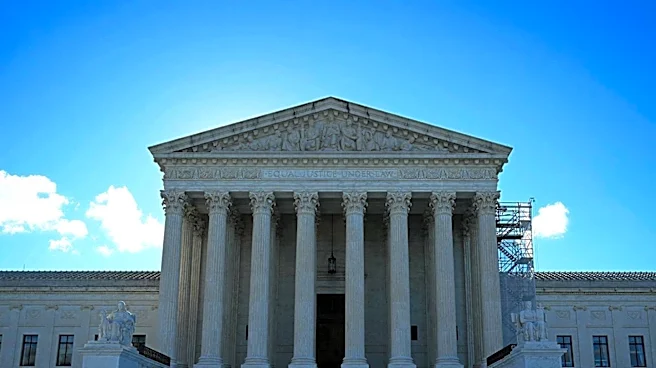
A Texas appeals court has significantly reduced the $50 million judgment against Infowars founder Alex Jones to $1.5 million. This ruling stems from a lawsuit filed by Sandy Hook parents Neil Heslin and Scarlett Lewis, whose 6-year-old son Jesse Lewis was
killed in the 2012 Newtown, Connecticut attack. Jones had falsely claimed the shooting was a hoax. The Texas Third Court of Appeals unanimously found that the parents did not provide sufficient evidence to exceed the state's $750,000 cap on damages for each plaintiff. The court determined that the trial court judge improperly allowed the parents to seek damages above this cap. Despite this reduction, Jones still faces a separate $1.25 billion judgment in Connecticut, which remains unaffected by the Texas ruling. Jones, who has portrayed the lawsuits as an attack on his First Amendment rights, conceded during the trial that the Sandy Hook attack was "100% real" and that his previous claims were wrong.
Why It's Important?
This decision by the Texas appeals court highlights the complexities and limitations within state legal frameworks regarding defamation and damages, particularly concerning statutory caps. While it offers a partial legal victory for Alex Jones in Texas, it does not negate the substantial financial liabilities he faces from other judgments. The ruling underscores the ongoing legal battles surrounding Jones's false claims about the Sandy Hook shooting and the severe impact these claims had on the victims' families. For the families, the reduction in the Texas judgment, while significant, is viewed by their attorney as "irrelevant" given the much larger outstanding judgments. This case continues to set precedents for how public figures are held accountable for spreading misinformation, especially when it leads to harassment and suffering for private citizens. It also brings into focus the differing legal standards and damage caps across U.S. states, which can lead to varied outcomes in similar cases.
What's Next?
Alex Jones has indicated his intention to appeal the Texas ruling further to the state Supreme Court, aiming to have the remaining damages thrown out. His legal team is described as "good constitutional lawyers" who are not backing down. Meanwhile, the $1.25 billion judgment against Jones in Connecticut remains in effect, and he has yet to make any payments on either judgment as he appeals the amounts and attempts to liquidate his company, Free Speech Systems. Jones and his company have filed for bankruptcy, and those legal proceedings are ongoing. Christopher Mattei, a lawyer for the Sandy Hook families in the Connecticut lawsuit, stated that Friday's ruling has no bearing on the ongoing lower court proceedings in Texas concerning the liquidation of Infowars' parent company. He expects these efforts to benefit the families who filed suit in Texas, despite the reduction in their specific judgment.
Beyond the Headlines
The legal saga involving Alex Jones and the Sandy Hook families extends beyond monetary judgments, touching upon fundamental issues of free speech, journalistic ethics, and the impact of misinformation in the digital age. Jones's initial claims that the Sandy Hook shooting was a hoax led to years of harassment and threats against the victims' families, illustrating the real-world consequences of unchecked conspiracy theories. The case also highlights the challenges of holding individuals accountable for speech that incites harm, particularly when they claim First Amendment protections. The ongoing appeals and bankruptcy proceedings reflect a broader struggle to enforce accountability against those who profit from spreading falsehoods. This situation also raises questions about the role of social media platforms and other distribution channels in amplifying such content, and the potential for legal systems to adapt to the rapid spread of misinformation.