






What's Happening?
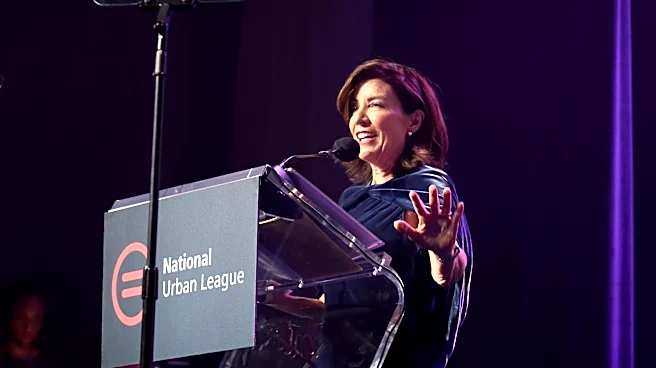
Marc H. Morial, President and CEO of the National Urban League, has issued a call to action regarding the declining reading scores across the United States. New York City's recent decline in reading scores, despite significant literacy reform efforts,
is highlighted as a national wake-up call. Data indicates that nearly 40 percent of fourth graders and approximately one-third of eighth graders read below the basic level, marking the highest recorded share. This trend signifies a national literacy crisis that poses threats to economic opportunity, educational equity, and the nation's future competitiveness. Morial emphasizes that reading is fundamental to all learning, and struggles in literacy create barriers to college completion, workforce success, and informed civic participation. He notes that while factors like increased screen time and digital distractions contribute, the core issue demands a comprehensive, systemic strategy beyond just teaching children to sound out words. The focus needs to shift towards developing students' capacity to engage with complex ideas, sustain attention, evaluate evidence, and build knowledge through reading.
Why It's Important?
This national reading crisis carries significant implications for the U.S. across multiple sectors. Economically, a less literate workforce can lead to reduced productivity, innovation, and global competitiveness. Individuals struggling with reading face diminished opportunities for higher education and skilled employment, perpetuating cycles of poverty and inequality. Socially, the crisis exacerbates existing achievement gaps, particularly affecting Black and Latino students who disproportionately bear the consequences of inadequate reading instruction. This undermines efforts towards educational justice and social mobility. Politically, a populace unable to critically engage with complex information and evaluate evidence may struggle with informed civic participation, potentially impacting democratic processes. The long-term societal cost includes a less engaged citizenry and a reduced capacity for collective problem-solving. Addressing this crisis is crucial for fostering a more equitable, prosperous, and well-informed society, ensuring that future generations can contribute meaningfully to the nation's progress.
What's Next?
The National Urban League advocates for a multi-faceted approach to address the literacy crisis. This includes implementing high-quality literacy instruction from early childhood through elementary school, with a strong emphasis on explicit, systematic instruction, particularly phonics and decoding. Strengthening early intervention programs is crucial to support struggling readers before learning gaps become entrenched. For older students, a national commitment to literacy recovery is needed, involving evidence-based strategies to enhance comprehension, vocabulary, and engagement with complex texts. This support is vital for students who fell behind during the pandemic. Additionally, there is a call for serious conversations about the role of technology in children's lives, suggesting that restricting unnecessary screen exposure, especially in early grades, could help rebuild reading habits and attention spans. The urgency of the situation demands a large-scale strategy, as incremental changes are deemed insufficient to avert long-term educational and economic disadvantages for struggling readers.
Beyond the Headlines
The literacy crisis extends beyond academic metrics, touching upon deeper societal and cultural shifts. The emphasis on 'Balanced Literacy' over foundational skills like phonics highlights a pedagogical debate with significant consequences for student outcomes. The rise of screen time and algorithm-driven content points to a broader cultural challenge in maintaining attention spans and fostering deep reading habits, potentially impacting critical thinking and analytical skills across the population. This shift could lead to a society less capable of nuanced understanding and more susceptible to misinformation. The disproportionate impact on Black and Latino students underscores persistent systemic inequities within the education system, suggesting that the crisis is not merely about reading ability but also about access to quality resources and equitable opportunities. Addressing this requires not only educational reform but also a re-evaluation of societal values regarding intellectual engagement and the role of technology in development.