


What's Happening?
Russian authorities have accused Ukrainian intelligence services of being involved in an assassination attempt on General Vladimir Alekseev, the first deputy head of Russia’s military intelligence agency, the GRU. The incident occurred in Moscow, where
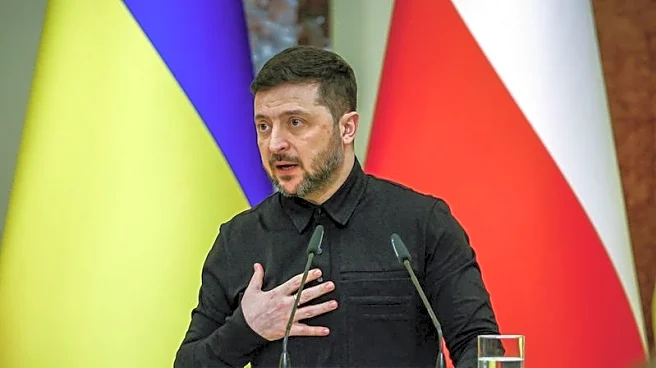
Alekseev was shot multiple times and wounded. The Russian Investigative Committee and the Federal Security Service (FSB) have stated that they identified and arrested the alleged perpetrator in Dubai, with assistance from the United Arab Emirates authorities. The suspect reportedly arrived in Moscow in late December with instructions from Ukrainian intelligence to carry out a terrorist attack, although no evidence has been provided to support this claim. Ukrainian Foreign Minister Andrii Sybiha has denied any involvement by Ukraine in the assassination attempt.
Why It's Important?
This development is significant as it heightens tensions between Russia and Ukraine, two countries already embroiled in a prolonged conflict. Accusations of state-sponsored assassination attempts can exacerbate diplomatic relations and potentially lead to further geopolitical instability in the region. The involvement of international actors, such as the United Arab Emirates, in the arrest of the suspect also highlights the global dimension of the incident. For the U.S., this situation could impact foreign policy decisions and alliances, as it navigates its relationships with both Russia and Ukraine. The incident underscores the ongoing volatility in Eastern Europe and the potential for escalation into broader conflicts.
What's Next?
The next steps may involve diplomatic engagements or retaliatory measures from either side. Russia may seek to present further evidence to support its claims, while Ukraine will likely continue to deny involvement. International bodies or third-party nations might be called upon to mediate or investigate the claims to prevent further escalation. The U.S. and other Western nations may need to reassess their positions and strategies in response to the evolving situation, potentially influencing sanctions, military aid, or diplomatic efforts in the region.