
What's Happening?
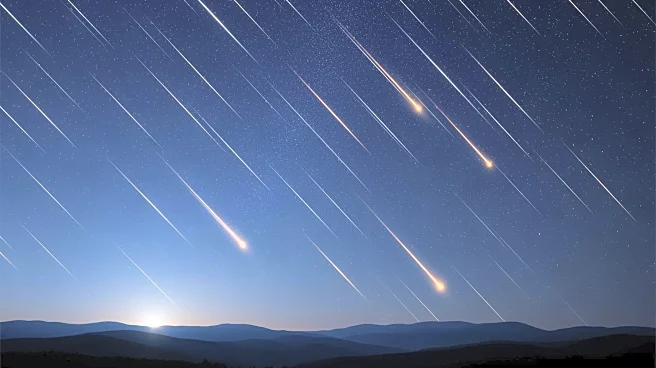
The Geminid meteor shower is expected to peak late on December 13, providing a stunning display for skywatchers in North America. The shower, known for being the richest of the year, will be visible under
dark skies free of moonlight until the waning crescent Moon rises around 2 or 3 a.m. Eastern Time. The peak is anticipated to occur around 3 a.m. Eastern Time, making it ideal for viewing across the continent. Observers can expect to see one or two meteors per minute on average, with the best views in areas with minimal light pollution.
Why It's Important?
The Geminid meteor shower is a significant event for both amateur and professional astronomers. It provides a unique opportunity to observe meteors originating from an asteroid, 3200 Phaethon, rather than a comet. This distinction offers valuable insights into the composition and behavior of meteors. The event also serves as an educational tool, sparking interest in astronomy and encouraging public engagement with the night sky. For many, it is a chance to witness a natural phenomenon that connects them to the broader universe.
What's Next?
As the Geminid meteor shower reaches its peak, observers are encouraged to find dark, open areas away from city lights to maximize their viewing experience. The shower's peak will last several hours, allowing ample time for observation. Following the event, astronomers may analyze data collected during the peak to enhance understanding of the shower's characteristics and its parent asteroid. The Geminids will continue to be a subject of study and public interest, contributing to ongoing discussions about meteor showers and their origins.