

What's Happening?
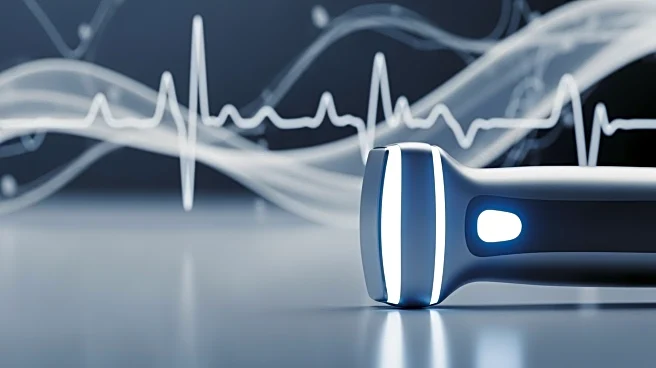
A recent study has identified transcranial Doppler (TCD) ultrasound as a potential tool for predicting future ischemic events in individuals with moyamoya arteriopathy. The study involved participants aged 26 and younger who had not undergone surgical
revascularization. Researchers found that elevated cerebral blood flow velocities (CBFV) measured by TCD were associated with an increased risk of ischemic events, such as clinical strokes and transient ischemic attacks. The study suggests that TCD could play a role in stroke risk stratification and surgical decision-making for patients with moyamoya.
Why It's Important?
Moyamoya arteriopathy is a condition that significantly increases the risk of stroke, particularly in young individuals. The ability to predict ischemic events using TCD could improve patient outcomes by allowing for earlier intervention and more targeted treatment strategies. This research highlights the potential of TCD as a non-invasive, cost-effective tool for monitoring patients with moyamoya, potentially reducing the incidence of strokes and improving quality of life. The findings could influence clinical practices and guidelines, leading to more personalized care for individuals with this condition.
What's Next?
Further research is needed to validate the findings of this study and to explore the use of TCD in larger, more diverse populations. If confirmed, TCD could become a standard part of the diagnostic and monitoring process for moyamoya patients. Researchers may also investigate the integration of TCD with other diagnostic tools to enhance its predictive accuracy. The development of standardized protocols for TCD use in moyamoya could facilitate its adoption in clinical settings, improving patient care and outcomes.