




What's Happening?
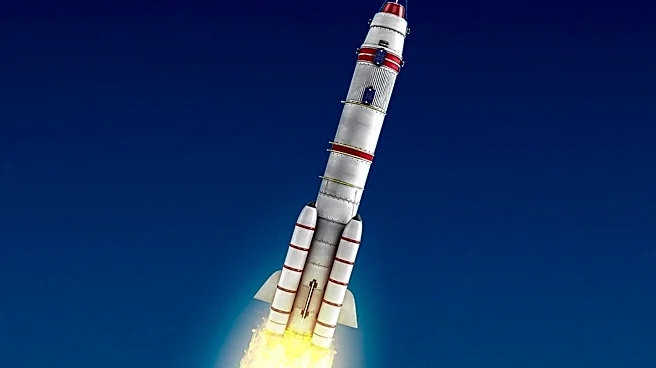
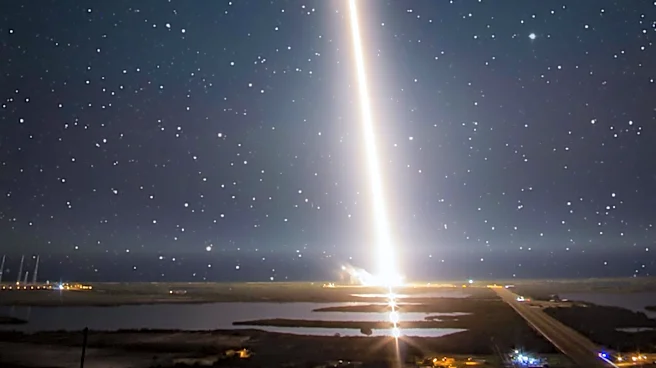
China's Gravity-1 rocket, operated by Orienspace, has successfully launched nine satellites from a sea-based platform off the coast of Shanghai. This marks the third successful mission for the world's most powerful solid-fuel rocket. The launch took place
on July 21, 2026, and all satellites reached their designated orbits. The Gravity-1 rocket, known for its squat and stubby design, stands about 100 feet tall and can carry up to 14,300 pounds to low Earth orbit. This mission underscores China's growing capabilities in space technology and its strategic use of sea-based launches to enhance flexibility and reach.
Why It's Important?
The successful launch of the Gravity-1 rocket highlights China's advancements in space technology and its strategic positioning in the global space race. By utilizing sea-based platforms, China can conduct launches with greater flexibility and reduced geopolitical constraints. This capability is crucial as nations vie for dominance in space exploration and satellite deployment. The mission also demonstrates China's commitment to expanding its space infrastructure, which has implications for global communications, surveillance, and scientific research. As China continues to develop more powerful rockets, such as the upcoming Gravity-2 and Gravity-3, it positions itself as a formidable player in the international space community.
What's Next?
Orienspace plans to continue its development of the Gravity-2 and Gravity-3 rockets, which will feature liquid-fueled core stages and solid rocket boosters. The Gravity-2 is expected to be ready for launch by the end of the year, potentially from another sea-based platform. These advancements will further enhance China's capabilities in deploying satellites and conducting space missions. The success of these initiatives may prompt other nations to accelerate their own space programs, leading to increased competition and collaboration in the space sector.