




What's Happening?
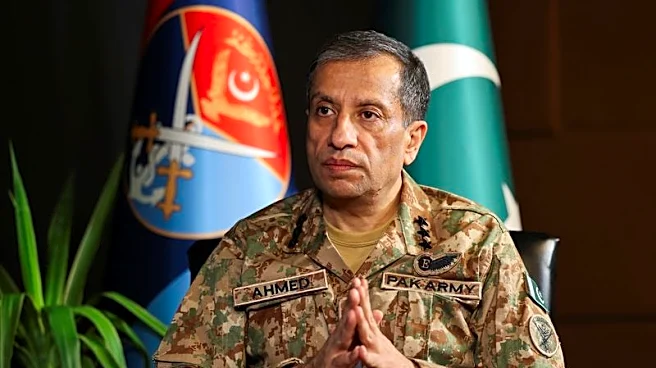
A recent meeting in Tehran, attended by Pakistan’s Field Marshal Asim Munir, Turkey’s Intelligence Chief Ibrahim Kalin, and Saudi Arabia’s Defense Minister Prince Khalid Bin Salman Al-Saud, discussed regional security issues following the formation of
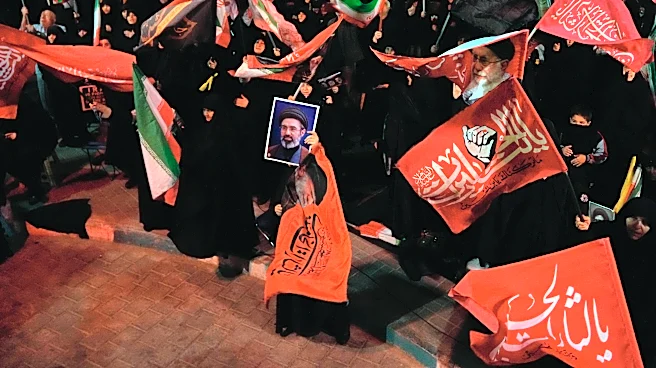
the trilateral 'Makkah Joint Defense Pact' (MJDA). This gathering occurred at a politically significant time, with US midterm elections approaching and amid threats of new US strikes on Iran. The meeting raises questions about achieving genuine peace through strategic cooperation when participating states are driven by competing national interests and strategic dependence on Western powers. Pakistan, Saudi Arabia, Turkey, and Iran each approach regional security with distinct national interests, geopolitical objectives, and strategic alliances. Any outcome from these arrangements is likely to be a pragmatic accommodation of competing interests rather than a structural resolution of long-standing conflicts. The US appears to be shifting its approach, leveraging regional actors like Pakistan and Saudi Arabia to bring Iran to the negotiating table for a US-favored deal, rather than relying solely on military action.
Why It's Important?
This development is important as it highlights the complex and often paradoxical nature of security architecture in West Asia, where regional alliances are formed amidst persistent external influence, particularly from the United States. The US strategy of externalizing the burden of containing states that challenge its hegemony to regional actors signifies a potential shift in its foreign policy approach, moving towards indirect influence rather than direct military engagement. This could have significant implications for U.S. military presence and resource allocation in the region. For U.S. industries, particularly those in defense and energy, the evolving security landscape presents both challenges and opportunities. Increased regional cooperation, even if driven by external pressures, could lead to new defense partnerships or shifts in energy supply chains. The emphasis on a negotiated settlement between Tehran and Washington, facilitated by regional partners, suggests a potential de-escalation of direct confrontation, which could impact global oil markets and U.S. economic interests tied to energy security. The involvement of key U.S. allies like Saudi Arabia and Turkey in these regional dialogues also underscores the intricate web of alliances and competing interests that the U.S. must navigate.
What's Next?
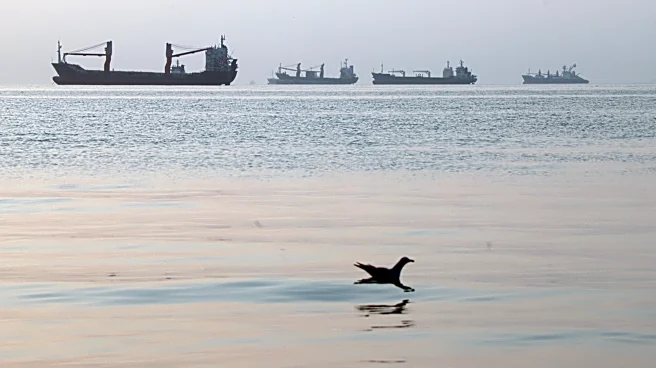
The immediate future will likely see continued diplomatic maneuvering as the US attempts to leverage its partners, particularly Pakistan and Saudi Arabia, to bring Iran to the negotiating table. The success of these efforts will depend on the willingness of Iran to engage and the ability of the mediating countries to navigate their own national interests alongside US objectives. For Pakistan, facilitating a settlement is crucial for its economic stability and regional security, especially given its border with Iran and dependence on maritime security in the Strait of Hormuz. Saudi Arabia also seeks regional stabilization to protect its economic prospects under 'Vision 2030' and consolidate its leadership role. Turkey, as a NATO member, aims to preserve its strategic interests and project itself as a Western-aligned state while preventing regional destabilization. The outcome of these negotiations could lead to a new regional security framework, potentially reducing tensions but also raising questions about the long-term autonomy of the participating states given their strategic dependencies on Western powers.
Beyond the Headlines
The ongoing developments in West Asia reveal a deeper geopolitical paradox: the pursuit of peace through alliances that are themselves influenced by external powers and driven by competing national interests. This raises fundamental questions about the authenticity and sustainability of such peace initiatives. The reliance of MJDA members—Turkey's NATO membership, Saudi Arabia's role as a major oil exporter to the US, and Pakistan's historical financial dependence on US-led institutions—suggests that their foreign policies may not be entirely independent. This dynamic could perpetuate a cycle where regional stability is contingent on external approval rather than genuine internal resolution. Ethically, this raises concerns about sovereignty and self-determination for nations in the region. Legally, any agreements reached under such conditions might be viewed as pragmatic accommodations rather than true resolutions, potentially leading to future instability. Culturally, the emphasis on external influence could hinder the development of indigenous solutions to regional problems, perpetuating a sense of dependency. The long-term implication is that true, lasting peace may remain elusive without a fundamental shift towards genuine autonomy and equitable power dynamics among regional actors.