








What's Happening?
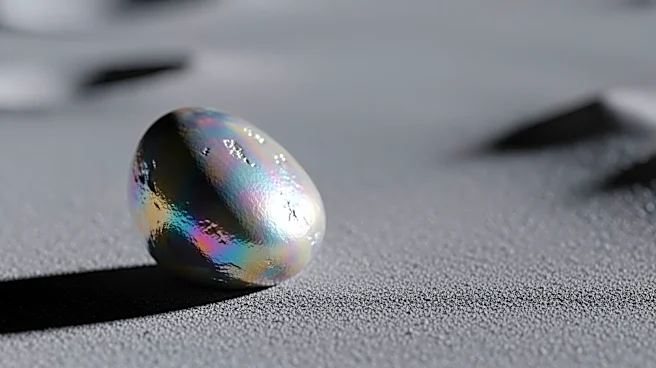
NASA has discovered a new material at the Glenn Research Center in Cleveland that could significantly aid future Moon missions. This material, formed by heating simulated lunar dust with scandium oxide, does not match any known substances in existing
databases. It offers potential for reducing the weight of loads astronauts carry by utilizing lunar resources, such as extracting metals from Moon rocks for construction and producing oxygen for fuel and life support. This discovery supports a 'live off the land' approach, crucial for sustainable lunar exploration.
Why It's Important?
The discovery of this new material is pivotal for advancing lunar exploration and establishing a sustainable human presence on the Moon. By enabling the use of lunar resources, NASA can reduce the dependency on Earth-supplied materials, lowering mission costs and increasing the feasibility of long-term lunar habitation. This material could also have terrestrial applications, offering new possibilities in materials science and engineering. The development aligns with NASA's broader goals of space exploration and could influence future mission planning and technology development.
What's Next?
Researchers will continue testing the new material under various conditions to assess its scalability and long-term stability. These tests will determine its practical applications in space missions and potential uses on Earth. The findings could lead to the development of new technologies for resource extraction and construction on the Moon, supporting NASA's Artemis program and other future lunar initiatives. The ongoing research will also explore the material's potential as a heat-resistant coating for aerospace components.