



What's Happening?
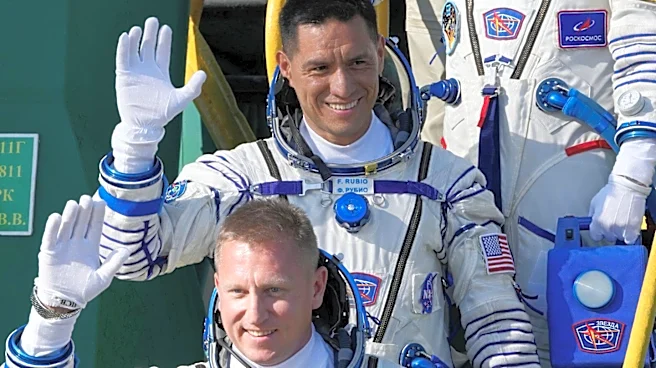
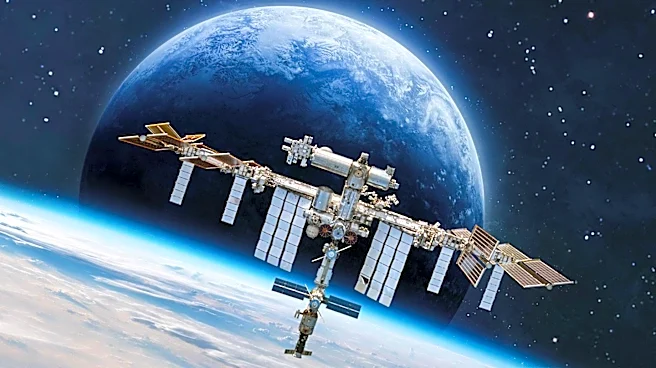
The Soyuz MS-28 spacecraft successfully returned three Expedition 74 crew members to Earth after an eight-month mission aboard the International Space Station (ISS). The spacecraft, carrying NASA astronaut Chris Williams and Roscosmos cosmonauts Sergey
Kud-Sverchkov and Sergei Mikaev, landed on the Kazakh steppe southeast of Dzhezkazgan at 5:27 a.m. CDT. The mission, which began with the launch and docking of the Soyuz MS-28 on November 27, 2025, involved the crew orbiting Earth 3,856 times and traveling over 102 million miles. This mission marked the first spaceflight for Williams and Mikaev, while Kud-Sverchkov completed his second mission. Following routine medical checks, the crew will be transported to Karaganda, Kazakhstan, and Williams will then return to the Johnson Space Center in Houston.
Why It's Important?
The successful return of the Expedition 74 crew underscores the ongoing collaboration between NASA and Roscosmos in space exploration. This mission contributes to the continuous human presence on the ISS, which is crucial for conducting scientific research and experiments that can benefit life on Earth and future space missions. The data collected during such missions help improve our understanding of space travel's effects on the human body, which is vital for planning longer missions, such as those to Mars. The mission's completion also highlights the reliability and effectiveness of the Soyuz spacecraft in safely transporting astronauts to and from the ISS.
What's Next?
Following their return, the crew will undergo post-mission evaluations and debriefings to assess their health and gather insights from their experiences. These evaluations are essential for refining future mission protocols and ensuring astronaut safety. NASA and Roscosmos will continue their partnership, with future missions planned to maintain the ISS's operations and further international space exploration efforts. The data and experiences from this mission will inform upcoming missions, including those involving commercial spaceflight and potential lunar and Martian expeditions.