



What's Happening?
NASA has issued a call for creative professionals to partner with the agency in sharing the stories of its missions, including the Artemis Moon missions and advancements in nuclear propulsion and aeronautics. The agency is seeking proposals from filmmakers,
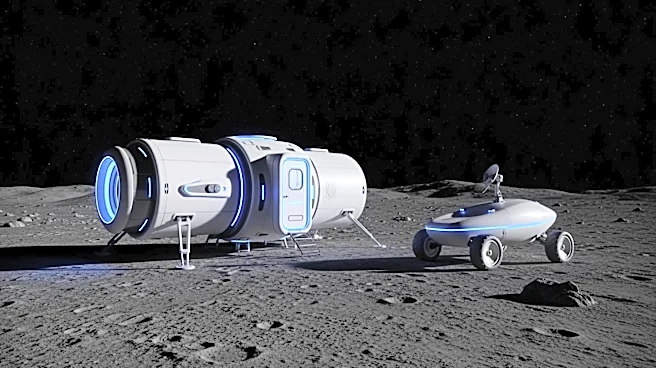
documentarians, songwriters, storytellers, poets, and others to collaborate under unfunded Space Act Agreements. The initiative aims to enhance public engagement and understanding of NASA's work by leveraging creative storytelling. Proposals are due by June 30, and NASA plans to select up to 10 partners. The focus areas include the Artemis program, which features upcoming missions such as Artemis III in 2027 and Artemis IV in 2028, as well as the development of a Moon Base. Additionally, NASA is advancing nuclear propulsion with the Space Reactor-1 Freedom mission to Mars in 2028. The agency is also involved in cutting-edge aviation work through various flight tests.
Why It's Important?
This initiative is significant as it represents NASA's effort to broaden its outreach and connect with the public through diverse storytelling mediums. By involving creatives, NASA aims to make its complex missions more accessible and engaging to a wider audience. This could enhance public interest and support for space exploration and technological advancements. The collaboration could also provide unique opportunities for creatives to work with a leading scientific agency, potentially leading to innovative content that highlights the importance of space exploration. The focus on missions like Artemis and nuclear propulsion underscores NASA's commitment to advancing human presence in space and developing new technologies.
What's Next?
Following the proposal submission deadline, NASA will review the entries and select up to 10 partners to collaborate on storytelling projects. These partnerships will likely result in a variety of creative outputs that will be used to engage the public and promote NASA's missions. The selected creatives will work closely with NASA to gain insights and access necessary for their projects. This collaboration could lead to new content that will be shared across various platforms, potentially reaching diverse audiences and inspiring future generations of scientists and explorers.