



What's Happening?
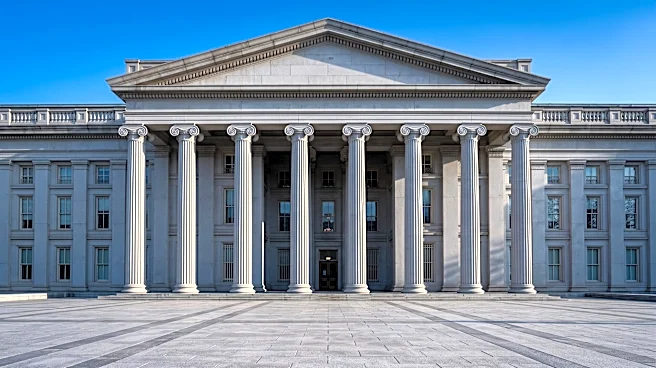
The Department of the Treasury's Office of Foreign Assets Control (OFAC) has issued Venezuela-related General License 5Z, which authorizes certain transactions related to the Petróleos de Venezuela, S.A. 2020 8.5 Percent Bond on or after November 5, 2026.
Concurrently, OFAC has also released an amended Venezuela-related Frequently Asked Question, FAQ 595. In addition to these Venezuela-specific actions, OFAC has updated its Specially Designated Nationals and Blocked Persons List (SDN List). These updates include deletions from the SDN List, such as Jose Raul VEGA SANCHEZ, Hans Peter BOMATTER, and MODULSAN MAKINA KESICI TAKIM VE DISLI SANAYI TICARET LIMITED SIRKETI. These deletions are related to counter-narcotics designations and Russia-related designations, indicating ongoing adjustments to U.S. sanctions policy based on evolving intelligence and strategic considerations.
Why It's Important?
OFAC's actions are critical for implementing and enforcing U.S. foreign policy and national security objectives through economic sanctions. The issuance of General License 5Z for Venezuela-related bonds provides clarity and authorization for specific financial transactions, which can have significant implications for investors and entities involved with Venezuelan debt. This type of license aims to manage the economic impact of sanctions while maintaining pressure on the targeted regime. The updates to the SDN List are equally important, as they directly affect individuals and entities globally by restricting their access to the U.S. financial system and prohibiting U.S. persons from engaging in transactions with them. The removal of certain individuals and entities from the list signifies either a change in their status, a re-evaluation of their threat level, or a strategic adjustment in sanctions enforcement. These changes impact international trade, financial institutions, and the global standing of sanctioned countries, influencing their economic behavior and political decisions.
What's Next?
OFAC will continue to monitor and adjust its sanctions programs in response to geopolitical developments and ongoing assessments of threats to U.S. national security and foreign policy. Further amendments to general licenses, additional FAQs, and updates to the SDN List are likely as circumstances evolve. Stakeholders, including financial institutions, businesses, and individuals, will need to remain vigilant and regularly consult OFAC's guidance and updated lists to ensure compliance. The ongoing review and modification of sanctions demonstrate a dynamic approach to foreign policy, where economic tools are continuously refined to achieve specific strategic outcomes. Future actions may include new designations targeting other illicit activities or regimes, as well as further adjustments to existing sanctions to maximize their effectiveness while minimizing unintended consequences.
Beyond the Headlines
The continuous adjustments to OFAC's sanctions lists and general licenses highlight the complex and often delicate balance between applying economic pressure and managing the broader economic and humanitarian impacts. The removal of entities from the SDN List, for instance, can signal a shift in diplomatic relations or a successful change in behavior by the sanctioned party, offering a pathway for re-engagement. Conversely, new designations underscore the persistent challenges posed by illicit actors and geopolitical adversaries. These actions also have significant legal and ethical implications for global businesses and financial institutions, which must navigate a complex web of regulations to avoid penalties. The transparency and accessibility of OFAC's updates are crucial for maintaining the rule of law and ensuring that sanctions are applied fairly and effectively. Ultimately, OFAC's role extends beyond mere enforcement; it shapes international financial norms and influences the behavior of state and non-state actors on a global scale.