



What's Happening?
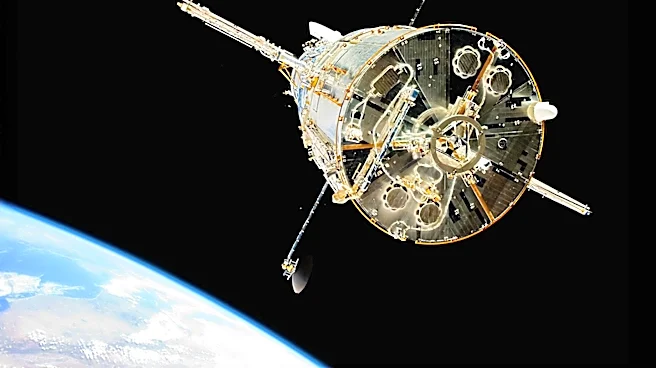
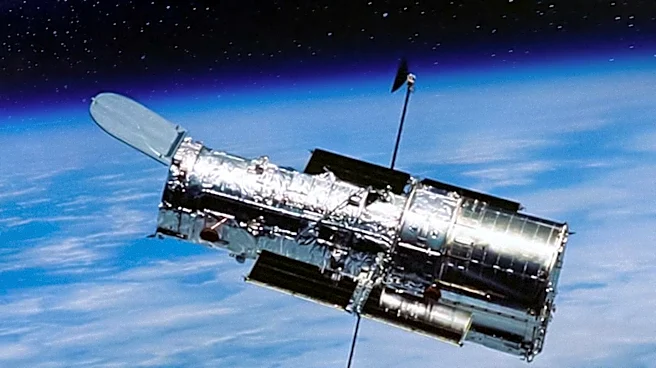
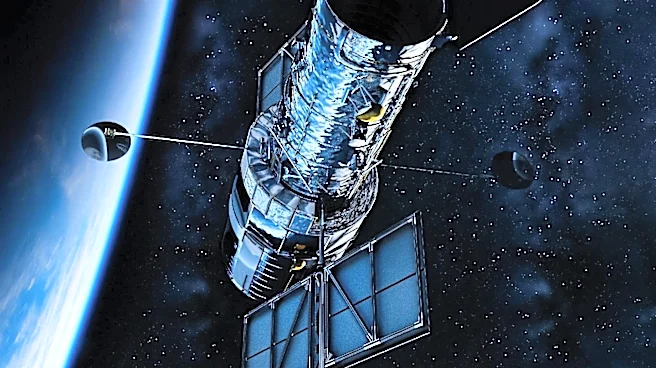
NASA issued a Request for Information (RFI) on October 29, 2026, seeking proposals from commercial space companies to reboost the Hubble Space Telescope. The RFI aims to explore industry capabilities for in-space servicing, specifically to lift Hubble to an orbit
of at least 600 km (approximately 373 miles) by 2032. This initiative comes as Hubble's orbit is decaying due to atmospheric drag, with its predicted re-entry into Earth's atmosphere in the early-to-mid 2030s. The agency is also open to proposals for performance upgrades or controlled re-entry. This is not NASA's first attempt; a similar RFI in 2022 did not lead to a funded program. The current RFI is a market research instrument to assess what vendors can offer, their maturity, and timelines, without any commitment of funding or contracts. The timing follows the unsuccessful commercial attempt to reboost the Swift observatory, providing recent real-world data on the challenges of such missions.
Why It's Important?
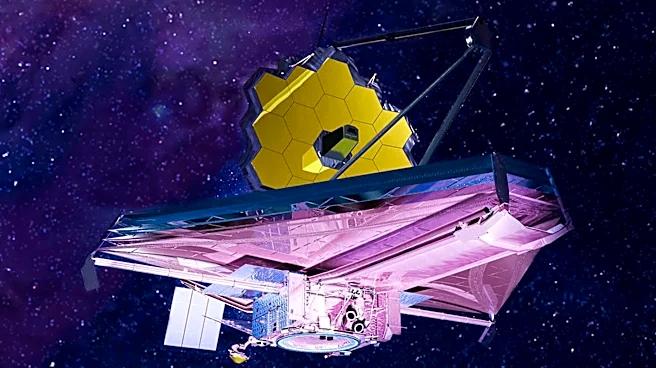
The Hubble Space Telescope remains a critical scientific asset, offering unique ultraviolet and optical observation capabilities that are not fully replicated by any other operational facility. Extending Hubble's operational life, even by a few years, would significantly reduce the potential gap in ultraviolet astronomy capabilities until a successor like the Habitable Worlds Observatory, expected in the 2040s, becomes operational. This effort also serves as a significant test case for the burgeoning commercial space industry's ability to perform complex on-orbit servicing missions. A successful reboost would validate advanced propulsion, sensor, robotic arm, and guidance software technologies for commercial customers, including satellite operators and defense agencies. Furthermore, it reflects NASA's broader strategy of leveraging commercial approaches for challenging missions, potentially setting a precedent for future space asset management.
What's Next?
Responses to NASA's RFI are due by November 30, 2026. Following the submission deadline, NASA will evaluate the proposals to understand the feasibility, cost, and technical approaches offered by commercial entities. The agency has not allocated a budget for this mission, meaning the next critical step will be securing funding if a viable solution is identified. This will likely involve discussions with Congress for appropriations. If a cost-effective and technically sound plan emerges, NASA will then proceed with selecting a vendor and developing a mission plan, aiming for completion by 2032. Should reboost proposals prove too expensive or technically challenging, a contract for a controlled disposal of Hubble could become a fallback option to mitigate debris risk.
Beyond the Headlines
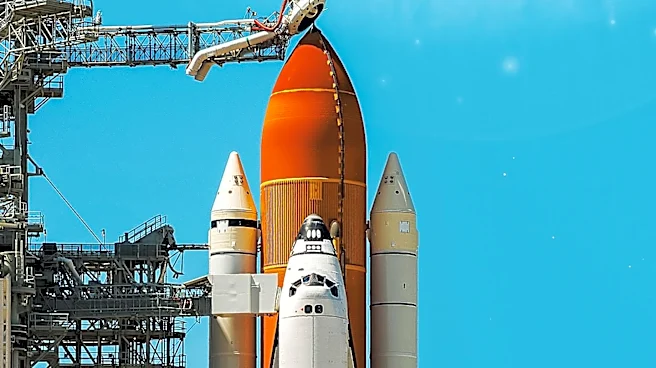
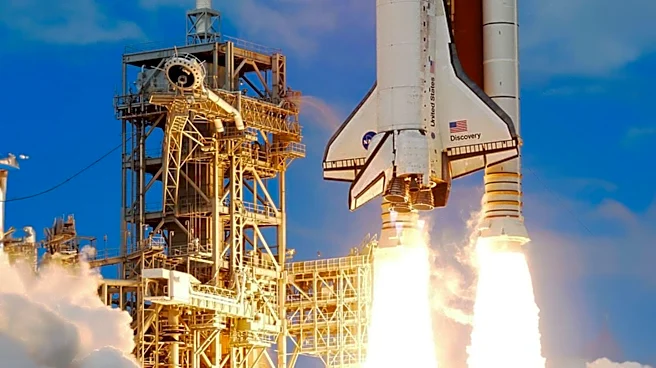
The endeavor to save Hubble highlights the evolving landscape of space operations, shifting from government-led servicing missions, like those performed by space shuttles, to commercially driven solutions. This transition introduces new considerations regarding risk allocation, cost-effectiveness, and the integration of private sector innovation into high-stakes scientific missions. The challenge of capturing and servicing a 36-year-old spacecraft not designed for robotic docking underscores the technical complexities and the need for advanced autonomous capabilities. The success or failure of this initiative could profoundly influence future policies on extending the life of aging space infrastructure, the role of commercial companies in space asset management, and the long-term sustainability of scientific observation platforms in orbit. It also raises questions about the balance between preserving legacy assets and investing in next-generation observatories.