
What's Happening?
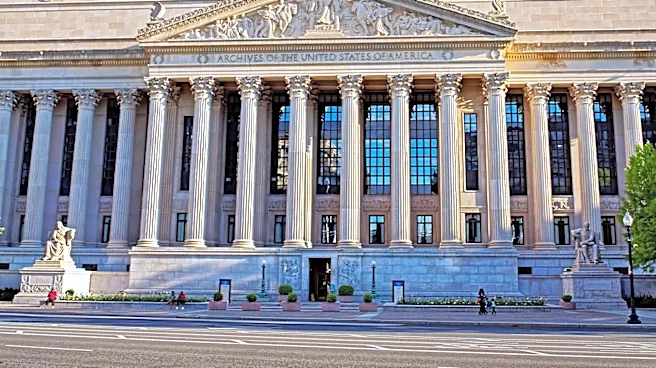
The National Archives and Records Administration (NARA), a federal agency based in Washington, DC, has provided records to the Civil Rights Cold Case Records Review Board. This action, which occurred on November
9, 2026, follows the Board's approval for the release of most of these records. NARA is responsible for maintaining a vast collection of documents, photos, and records pertinent to the nation's history, including veterans' service records and educational resources. The agency also oversees the presidential libraries system, which includes facilities such as the Obama and Reagan libraries. The provision of these specific records to the Civil Rights Cold Case Records Review Board comes after some previously scheduled postponements for their release were withdrawn, indicating a move towards greater transparency regarding historical civil rights cases.
Why It's Important?
This development is significant for several reasons, primarily concerning historical accountability and transparency in U.S. civil rights matters. The release of these records by NARA to the Civil Rights Cold Case Records Review Board can shed new light on unresolved cases from the Civil Rights era, potentially bringing closure to victims' families and correcting historical narratives. For civil rights advocates and historians, access to these documents is crucial for a more complete understanding of a pivotal period in American history. The decision to withdraw postponements for release underscores a commitment to public access to government records, which is a cornerstone of democratic governance. This action could also set a precedent for future releases of sensitive historical documents, impacting how federal agencies manage and disclose information related to past events.
What's Next?
The immediate next step involves the Civil Rights Cold Case Records Review Board processing and potentially making public the newly received records. This could lead to renewed investigations or public discussions surrounding specific cold cases. Historians, researchers, and civil rights organizations will likely analyze these documents to uncover new facts or perspectives. The transparency demonstrated by NARA in this instance may encourage similar actions from other government bodies regarding historical records. Furthermore, the process could influence future policies on declassification and public access to sensitive government information, particularly concerning historical injustices. The public and affected communities will be watching closely for the content of these records and any subsequent actions taken by the Board or other authorities.
Beyond the Headlines
The provision of these records by NARA touches upon deeper ethical and legal implications regarding the government's responsibility to its citizens, particularly concerning historical injustices. It highlights the ongoing societal effort to reconcile with past wrongs and ensure that justice, even if delayed, is pursued. The act of releasing these documents, especially after initial postponements, reflects a cultural shift towards greater openness and a recognition of the importance of historical truth. This move could also influence public trust in government institutions, demonstrating a commitment to transparency and accountability. Legally, it reinforces the principles of the Freedom of Information Act and similar statutes designed to ensure public access to government information, potentially strengthening arguments for broader access to historical records in other contexts.