







What's Happening?
Nations in the Western Indian Ocean, including Somalia, are calling for enhanced marine protection and sustainable use of ocean resources, marking 40 years of cooperation under the Nairobi Convention. The 12th Conference of the Parties (COP12) to the Nairobi Convention,
held in Dar es Salaam, highlighted significant progress in marine biodiversity protection, ecosystem restoration, and regional environmental governance. Achievements include seven of the ten contracting parties ratifying the UN Biodiversity Beyond National Jurisdiction (BBNJ) Agreement (High Seas Treaty) and the restoration of approximately 18,000 hectares of mangroves. However, leaders, including UN Assistant Secretary-General Elizabeth Maruma Mrema, warned that public financing alone is insufficient to meet the region's growing environmental and development needs. There is a call for greater cooperation among governments, scientific institutions, civil society organizations, development partners, and the private sector to mobilize resources and accelerate implementation.
Why It's Important?
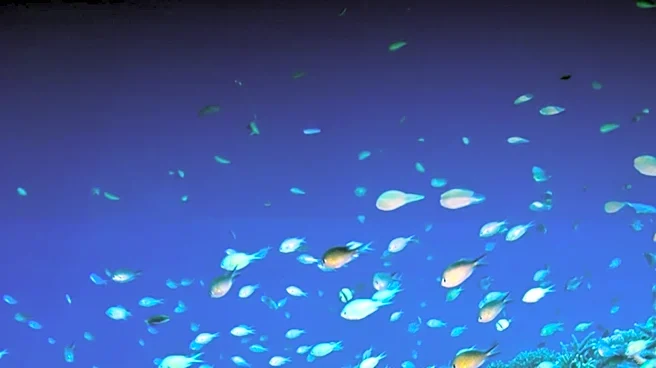
The Western Indian Ocean region is economically vital, generating approximately $20.8 billion annually, with ecosystem services valued at around $25 billion per year. Over 65 million people directly depend on these ocean resources for food, employment, and income, making marine conservation crucial for economic development, food security, and climate resilience. The ongoing challenges of climate change, rising sea temperatures, coral bleaching, sea-level rise, coastal erosion, and marine pollution threaten these ecosystems and livelihoods. The call for stronger regional partnerships and diversified funding sources underscores the urgent need to protect these valuable marine assets. Without sustained financing and effective enforcement of environmental commitments, the progress made could be reversed, impacting millions and destabilizing regional economies dependent on the blue economy.
What's Next?
The future of marine protection in the Western Indian Ocean hinges on the ability of governments to translate environmental commitments into effective enforcement, sustained financing, and tangible benefits for coastal communities. This includes strengthening the restoration of mangroves, seagrasses, and coral reefs, alongside improved pollution control, marine spatial planning, and sustainable fisheries management. Governments are urged to integrate regional environmental agreements into national legislation, allocate dedicated budgets, and ensure effective enforcement. Furthermore, there is a strong emphasis on involving women, young people, local communities, and the private sector in decisions concerning marine conservation and the blue economy to ensure inclusive and sustainable development. The continued mobilization of resources through diverse partnerships will be critical for accelerating implementation.
Beyond the Headlines
The discussions at COP12 reveal a broader global trend where environmental and development needs are outstripping public financing capabilities. The emphasis on private sector involvement and diverse partnerships signals a shift towards more integrated and collaborative models for conservation and sustainable development. This approach acknowledges that environmental challenges are deeply intertwined with economic and social issues, requiring holistic solutions. The struggle to secure sufficient financing and enforce agreements highlights the persistent gap between environmental rhetoric and practical implementation. The long-term success of these initiatives will depend not only on financial investment but also on fostering a collective sense of responsibility and ownership among all stakeholders, ensuring that the benefits of a healthy blue economy are equitably shared.