





What's Happening?
Governor Brian Kemp of Georgia has announced a special legislative session set for June 17 to address redistricting in response to a recent U.S. Supreme Court decision. The ruling in Louisiana v. Callais found that Louisiana's congressional districting was
unconstitutional due to racial gerrymandering, prompting similar concerns in Georgia. The special session will focus on revising Georgia's electoral maps for the State Senate, State House of Representatives, and U.S. House of Representatives, with changes to be implemented by the 2028 election cycle. This move follows the adjournment of the regular 2026 General Assembly session and aims to ensure compliance with the Supreme Court's decision.
Why It's Important?
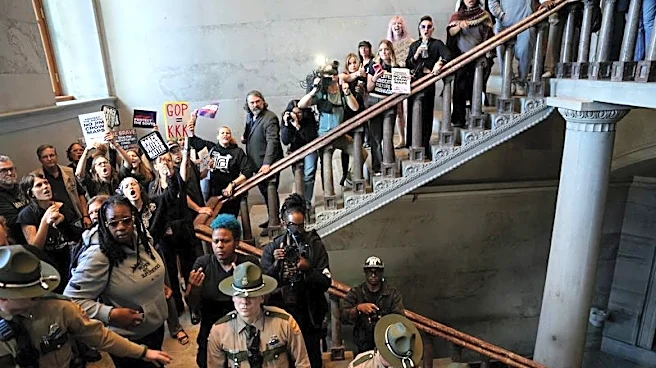
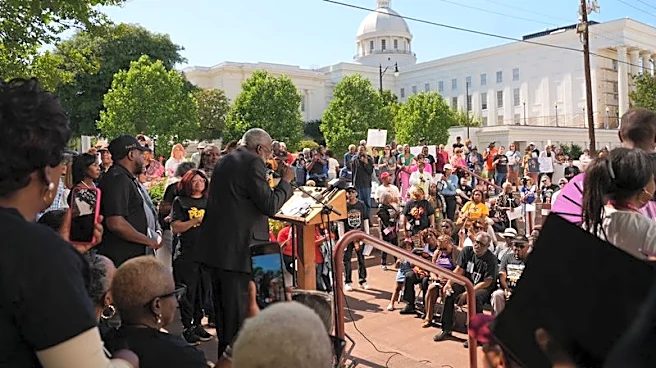
The redistricting session is significant as it addresses potential racial gerrymandering in Georgia's electoral maps, a critical issue for fair representation. The decision to redraw the maps could impact the political landscape in Georgia, a state that has become a key battleground in recent elections. The changes may influence the balance of power between political parties, affecting both state and national elections. The move has sparked debate, with Republican leaders supporting the session to align with traditional redistricting principles, while Democrats criticize it as an attempt to diminish the voting power of minority groups.
What's Next?
The special session will likely see intense political debate as lawmakers work to create new electoral maps. The outcome could lead to legal challenges, particularly if the new maps are perceived as unfairly favoring one party. The session's results will be closely watched by political analysts and could set a precedent for other states facing similar redistricting challenges. Additionally, the changes may influence voter turnout and engagement in future elections, as both parties mobilize to protect their interests.