
What's Happening?
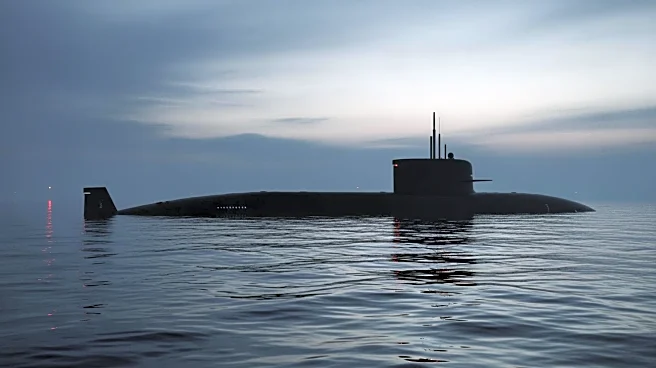
North Korea has released images of what it claims to be its first nuclear-powered submarine, a significant development in its military capabilities. The submarine, reportedly weighing 8,700 tons, is comparable
in size to the United States Navy's attack submarines. North Korean leader Kim Jong Un inspected the submarine, which is still under construction and has not yet been launched. This development follows South Korea's recent plans to develop its own nuclear-powered submarines, a move supported by the Trump administration. The nuclear-powered submarines offer strategic advantages, such as the ability to remain submerged for extended periods and operate more quietly and quickly than conventional submarines. North Korea's announcement is part of a broader military expansion plan that includes advanced missile systems and new naval vessels.
Why It's Important?
The unveiling of North Korea's nuclear-powered submarine marks a significant escalation in military capabilities on the Korean Peninsula, potentially altering the regional security dynamics. This development could increase tensions between North and South Korea, as well as with the United States and other regional powers. The ability to deploy nuclear-powered submarines enhances North Korea's strategic deterrence, complicating defense strategies for its adversaries. The move also underscores North Korea's commitment to advancing its military technology despite international sanctions and diplomatic isolation. The presence of such submarines could lead to an arms race in the region, prompting neighboring countries to bolster their own military capabilities in response.
What's Next?
North Korea may proceed with missile tests from the new submarine once it is operational, potentially within the next two years. This could provoke further international condemnation and lead to increased military readiness among neighboring countries. South Korea, having received U.S. support for its own nuclear submarine program, may accelerate its development efforts, although it could take a decade to complete. The international community, particularly the United States and its allies, will likely monitor these developments closely and consider diplomatic or economic measures to address the growing military threat posed by North Korea.
Beyond the Headlines
The introduction of nuclear-powered submarines by North Korea could have long-term implications for regional stability and global non-proliferation efforts. It highlights the challenges of containing nuclear technology and the potential for its spread to other nations. The presence of Kim Jong Un's daughter during the inspection suggests a possible grooming of a successor, indicating a focus on maintaining the regime's continuity. This development also raises questions about the effectiveness of current diplomatic strategies and the need for renewed efforts to engage North Korea in dialogue to prevent further escalation.