







What's Happening?
The mining industry in Marquette County, Michigan, has a rich history spanning nearly 200 years, significantly shaping the local communities. Initially, mining companies controlled almost every aspect of life, owning stores, utilities, and housing for
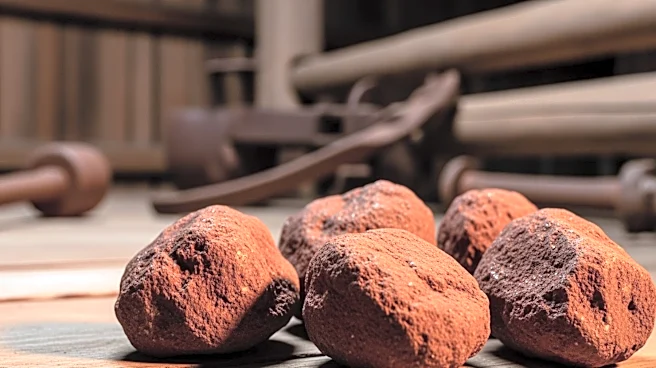
workers. The industry attracted thousands of immigrants from various countries, including Cornwall, Finland, Sweden, and Italy, who settled in the region to work in the mines. The discovery of iron ore deposits by William Austin Burt in 1844 near Teal Lake led to the development of the Marquette Iron Range. This discovery was crucial for the industrial growth of the United States, as iron from the Upper Peninsula played a significant role in the nation's development. The mining operations also led to the establishment of related industries, such as charcoal production for forges, and the construction of infrastructure like railroads and shipping facilities to transport the ore.
Why It's Important?
The historical development of the iron ore mining industry in Marquette County highlights the profound impact of natural resource extraction on local economies and communities. The influx of immigrants and the establishment of mining towns contributed to the cultural and demographic diversity of the region. The industry's legacy is evident in the infrastructure and community institutions that were built to support the mining workforce. Additionally, the iron ore extracted from this region was pivotal in fueling the industrialization of the United States, underscoring the strategic importance of natural resources in national economic development. The story of Marquette County serves as a case study in understanding the socio-economic transformations driven by resource-based industries.