


What's Happening?
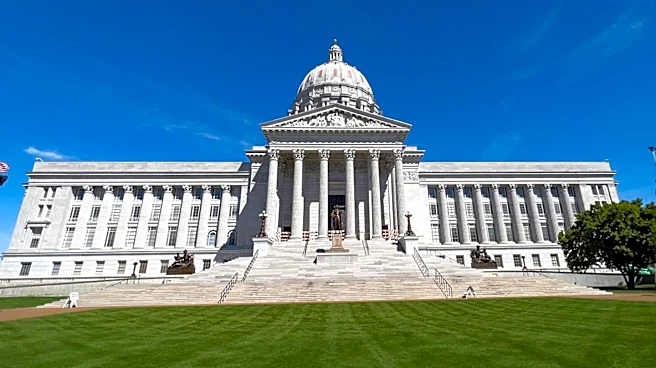
Missouri voters have decisively rejected two significant constitutional amendments, with Amendment 4 failing by nearly 80% and Amendment 5 by over 82%. Amendment 4 aimed to make it more challenging to amend the state constitution by requiring majority
support in every congressional district, while Amendment 5 proposed phasing out the state's income tax, allowing for increased sales and use taxes to compensate for the revenue loss. Governor Mike Kehoe supported both amendments, advocating for bold economic policies. However, the amendments faced strong opposition, with over a million votes cast against them. Kansas City Mayor Quinton Lucas criticized the amendments, labeling them as failures of leadership and detrimental to Missouri families. Meanwhile, House Minority Leader Ashley Aune highlighted the political repercussions for state leaders backing these measures. In contrast, voters approved Amendments 1 and 2, which renew the sales tax funding for state parks and make the Jackson County assessor an elected position, respectively.
Why It's Important?
The rejection of these amendments reflects a significant pushback against proposed changes to Missouri's tax and constitutional amendment processes. The outcome underscores the electorate's resistance to altering the state's fiscal structure and the perceived threat to democratic processes. The decision to maintain the income tax and current amendment procedures suggests a preference for stability and caution against rapid fiscal policy shifts. This result could influence future legislative strategies and political campaigns, as it signals voter priorities and concerns about economic equity and governance. The approval of Amendments 1 and 2 indicates support for maintaining public services and local governance structures, highlighting the importance of these issues to Missouri voters.
What's Next?
Following the defeat of Amendments 4 and 5, Missouri's political landscape may see increased efforts to address voter concerns about economic policies and governance. Governor Kehoe and other state leaders may need to reassess their strategies and engage with constituents to develop policies that align with public sentiment. The upcoming elections could further reflect these dynamics, as voters may hold lawmakers accountable for their positions on these issues. Additionally, the approval of Amendments 1 and 2 suggests continued support for public services and local governance, which may shape future legislative priorities.