







What's Happening?
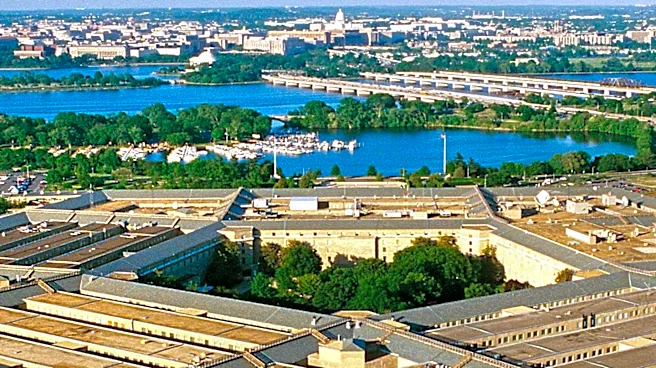
The U.S. armed forces, a term used by a Congressional Research Service primer for the U.S. military service branches, are headed by the President of the United States. The Secretary of Defense reports directly to the President as Commander-in-Chief. The Department
of Defense, described as America’s largest government agency, oversees most military branches. These branches include the Army, Navy, Marine Corps, Air Force, and Space Force. Each branch has a distinct core role: the Army provides ground forces, the Navy operates on, above, and below water, the Marine Corps consists of amphibious and ground units (and is a component of the Department of the Navy), the Air Force handles air and space capabilities, and the Space Force organizes, trains, and equips space forces. The Coast Guard is an exception in the chain of command, falling under the Department of Homeland Security during peacetime and operating under the Navy during war, not the Department of Defense. The National Guard, composed of the Army National Guard and Air National Guard, serves as a versatile force complementing active duty for humanitarian, domestic, combat, and homeland security work. Reserve components primarily work civilian jobs but can be called to full-time duty.
Why It's Important?
The clear delineation of roles and command structure within the U.S. armed forces is crucial for national security and effective military operations. This organizational framework ensures accountability, coordination, and specialized capabilities across different domains of warfare. The President's role as Commander-in-Chief underscores civilian control over the military, a fundamental principle of U.S. democracy. The Department of Defense's vast size and mission to deter war highlight the significant resources and strategic importance placed on maintaining a robust defense. Understanding the distinct functions of each service branch, from ground operations by the Army to space defense by the Space Force, is vital for strategic planning, resource allocation, and interoperability in both domestic and international contexts. The unique oversight of the Coast Guard under Homeland Security in peacetime emphasizes its dual role in national defense and domestic security, particularly maritime safety and law enforcement. The existence of reserve components and the National Guard provides a flexible force multiplier, allowing for rapid mobilization in times of crisis while minimizing the cost of a fully active-duty force.
What's Next?
The established structure of the U.S. armed forces is designed for long-term stability and adaptability to evolving global threats. Future developments will likely involve continuous modernization efforts within each branch to maintain technological superiority and operational effectiveness. This includes ongoing investments in advanced weaponry, cybersecurity, and space capabilities, particularly for the Space Force, which is a relatively new branch. The Department of Defense will continue to manage its vast resources to support these initiatives, ensuring that each service branch can fulfill its core mission. Discussions around defense budgets and strategic priorities will shape the allocation of funds across the Army, Navy, Marine Corps, Air Force, and Space Force. The role of the National Guard and reserve components may also evolve in response to domestic emergencies and global deployments, potentially leading to adjustments in training and readiness protocols. Inter-agency cooperation, especially between the Department of Defense and the Department of Homeland Security regarding the Coast Guard, will remain critical for comprehensive national security.
Beyond the Headlines
The intricate structure of the U.S. armed forces reflects a complex balance between specialization and unified command, a system refined over centuries to address diverse threats. This organizational design has profound implications for military culture, inter-service rivalry, and the integration of new technologies. Each branch fosters a distinct identity and operational philosophy, which can influence everything from procurement decisions to tactical doctrine. The civilian leadership, through the President and Secretary of Defense, plays a critical role in harmonizing these diverse elements, ensuring that military power aligns with national policy objectives. The sheer scale of the Department of Defense and its global reach also raise ethical considerations regarding the use of force, international relations, and the impact of military operations on civilian populations. Furthermore, the continuous evolution of warfare, driven by advancements in artificial intelligence, cybernetics, and space technology, constantly challenges the existing framework, prompting ongoing debates about organizational agility, resource allocation, and the future of military strategy. The balance between maintaining traditional strengths and adapting to emerging threats is a perpetual challenge for this vast and complex institution.