




What's Happening?
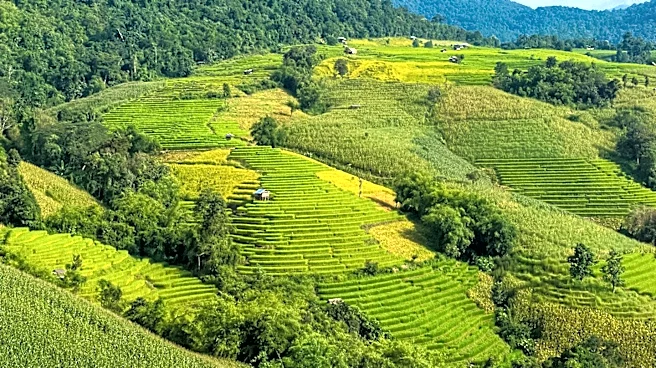
A new study reveals that retiring farmland in the western U.S., while effective in saving water, may inadvertently increase wildfire risk. Farmland often acts as a natural firebreak, with crops holding more water and tilled fields lacking tall fuel to
carry flames. However, when these fields are taken out of production, they are frequently replaced by grass and brush, which are more combustible. Researchers Austen Lorenz of Aythya Analytics and Beatrice Gordon of the Desert Research Institute, along with a National Interagency Fire Center manager, mapped 9,948 wildfires across 11 western states between 1985 and 2024. Their findings indicate that cropland was approximately 2.8 times more likely to be found outside a fire's perimeter than inside, suggesting its effectiveness in stopping fires. In 91.4% of fires with cropland near the edge, more cropland was outside the burn area than inside.
Why It's Important?
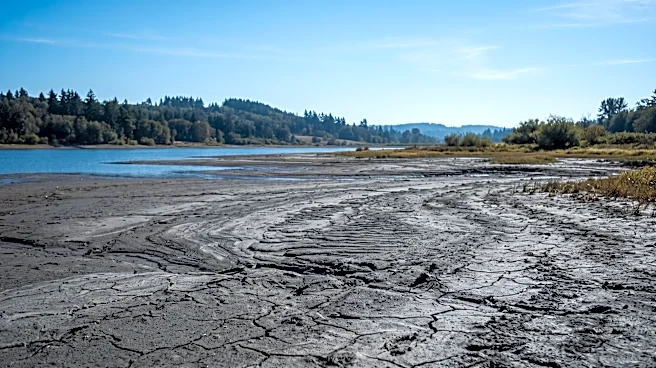
This research highlights a critical trade-off in the arid western U.S.: water conservation versus wildfire mitigation. As the region faces shrinking snowpacks and groundwater supplies, retiring irrigated farmland is a common strategy to save water. For instance, fallowing an almond acre can save enough water for roughly five households annually. However, this practice removes a significant natural barrier against wildfires, potentially exposing communities and ecosystems to greater risk. The conversion of cropland to grass or scrub, which occurred in 77% of the studied watersheds, creates more flammable landscapes. In the remaining 19% of watersheds, cropland was replaced by housing, which not only removes the firebreak but also introduces ignition sources and structures that complicate firefighting efforts and necessitate evacuations. This complex interaction demands a more integrated approach to resource management.
What's Next?
The study's authors plan to develop a calculation that quantifies the wildfire risk added by retiring a field against the water saved. This tool would enable water districts to make more informed decisions when considering fallowing programs. They also suggest that programs like the USDA's Conservation Reserve Program could incorporate fire buffering as a criterion for land idling, incentivizing practices that reduce wildfire risk. The findings emphasize the need for a holistic approach to managing interconnected hazards in the West, moving beyond single-issue solutions. Policymakers and land managers must consider the cascading effects of water conservation strategies on wildfire dynamics, aiming for solutions that address both challenges simultaneously. This could involve strategic land management, prescribed burns, or cultivating less flammable vegetation in areas where farmland is retired.
Beyond the Headlines
The dilemma presented by retiring farmland in the West underscores the broader challenges of climate change and resource scarcity in the U.S. It reveals how seemingly beneficial environmental policies can have unintended consequences, necessitating a multi-faceted understanding of ecological systems. The study prompts a re-evaluation of land-use planning, urging a shift from isolated decision-making to integrated strategies that consider water, fire, and urban development in concert. The increasing conversion of farmland to housing in some areas further complicates this issue, intensifying the wildland-urban interface and increasing the vulnerability of human settlements to wildfires. This situation calls for innovative solutions that protect both water resources and communities, potentially through agroforestry, fire-resistant landscaping, or community-based fire prevention initiatives that engage former agricultural lands.