




What's Happening?
U.S. Senators Ted Budd (R-N.C.) and Chris Coons (D-Del.) have introduced the Foundational Infrastructure for Responsible Use of Small Modular Reactor Technology (FIRST) Act. This bipartisan legislation aims to codify the U.S. State Department's FIRST program,
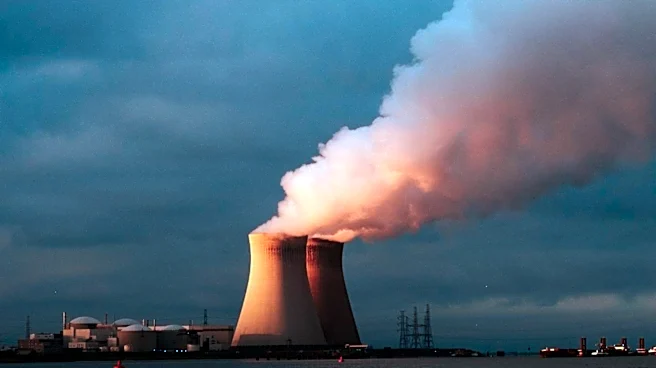
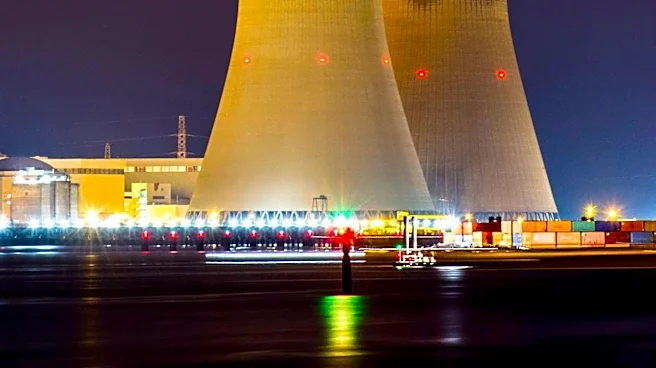
which supports the responsible deployment of civil nuclear energy globally. The bill seeks to prioritize U.S. economic and national security interests by advancing the nuclear industry and supporting American companies' partnerships with other countries expanding their nuclear energy programs. The FIRST program, launched in 2019, is a multiagency initiative that leverages public-private partnerships to strengthen U.S. leadership in civil nuclear energy. It engages with over 50 partner countries to deploy advanced nuclear technologies, including small modular reactors (SMRs), adhering to international standards for nuclear security, safety, and nonproliferation.
Why It's Important?
The introduction of the FIRST Act is significant as it underscores the U.S. commitment to maintaining leadership in the global nuclear energy sector. By codifying the FIRST program, the U.S. aims to enhance its economic and national security interests while promoting the safe and responsible use of nuclear technology worldwide. This move could bolster the U.S. economy by expanding markets for American nuclear technology innovators. Additionally, it positions the U.S. as a key player in setting international standards for nuclear safety and nonproliferation, which is crucial in the context of global energy security and environmental sustainability.
What's Next?
The bill will likely undergo further discussions and evaluations in the Senate. If passed, it could lead to increased collaboration between the U.S. and international partners in the nuclear energy sector. The focus will be on ensuring that the deployment of nuclear technologies aligns with the highest safety and security standards. The legislation may also prompt other countries to adopt similar frameworks, potentially leading to a more standardized global approach to nuclear energy deployment.