





What's Happening?
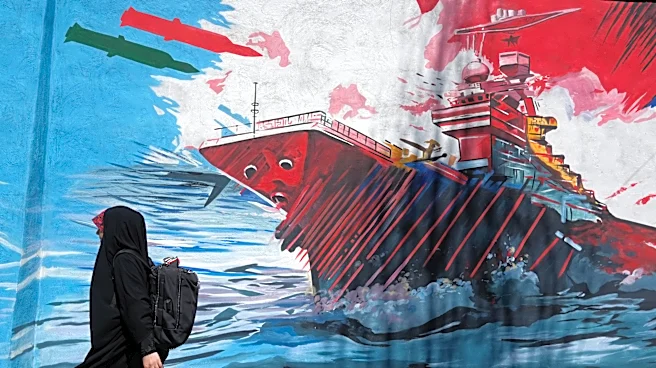
A recent Reuters survey has revealed that the Organization of the Petroleum Exporting Countries (OPEC) experienced its lowest oil output in over two decades in May 2026. This decline is primarily attributed to a U.S. naval blockade that has significantly
reduced Iran's oil exports. The blockade, which began on April 13, has also led to the effective closure of the Strait of Hormuz, further impacting exports from other Gulf producers. The survey, which includes data from financial group LSEG and other tracking companies, reported that OPEC's output fell by 1.06 million barrels per day to 16.13 million barrels per day. This figure is the lowest since at least 2000 and is even below the levels seen during the COVID-19 pandemic when demand plummeted. Iran's exports have dropped to their lowest in six years, while Saudi Arabia also saw a decline. However, Iraq managed to increase its supply due to higher domestic use.
Why It's Important?
The significant drop in OPEC's oil output has broad implications for global oil markets and geopolitical dynamics. The U.S. blockade on Iran not only affects Iran's economy but also disrupts the global oil supply chain, potentially leading to increased oil prices worldwide. This situation underscores the geopolitical tensions in the Middle East and the strategic importance of the Strait of Hormuz, a critical chokepoint for global oil transportation. The reduced output from OPEC could lead to tighter oil markets, affecting energy prices and economic stability in oil-dependent regions. Additionally, the situation highlights the ongoing challenges faced by OPEC in balancing production levels amidst geopolitical conflicts and economic sanctions.
What's Next?
The continuation of the U.S. blockade and the closure of the Strait of Hormuz could lead to further disruptions in oil supply, prompting OPEC and its allies to reassess their production strategies. Countries affected by the blockade may seek diplomatic solutions or alternative routes to mitigate the impact on their economies. The global oil market will likely remain volatile, with potential price fluctuations as stakeholders respond to the evolving geopolitical landscape. OPEC may need to engage in negotiations with the U.S. and other international players to address the blockade's impact and stabilize the oil market.